Walk into any factory floor and you’ll see rows of lockers. What keeps those lockers safe is the lock on the front. A locker lock has to do two things well: stop the wrong people from opening the door, and let the right people open it quickly, often many times a day. Locker locks are different from normal door locks since they are both secure and easy to use.
In this guide, we’ll look at what a locker lock really is, how it works, and the many types you’ll find—from simple key locks to smart electronic systems. We’ll also explain the locking mechanisms behind them, compare strengths and limits, and highlight where each type makes sense. To ground it in real products, we’ll bring in examples from Fornd’s hardware lineup, so you can see how material, finish, and design affect real-world performance.
What Is a Locker Lock?
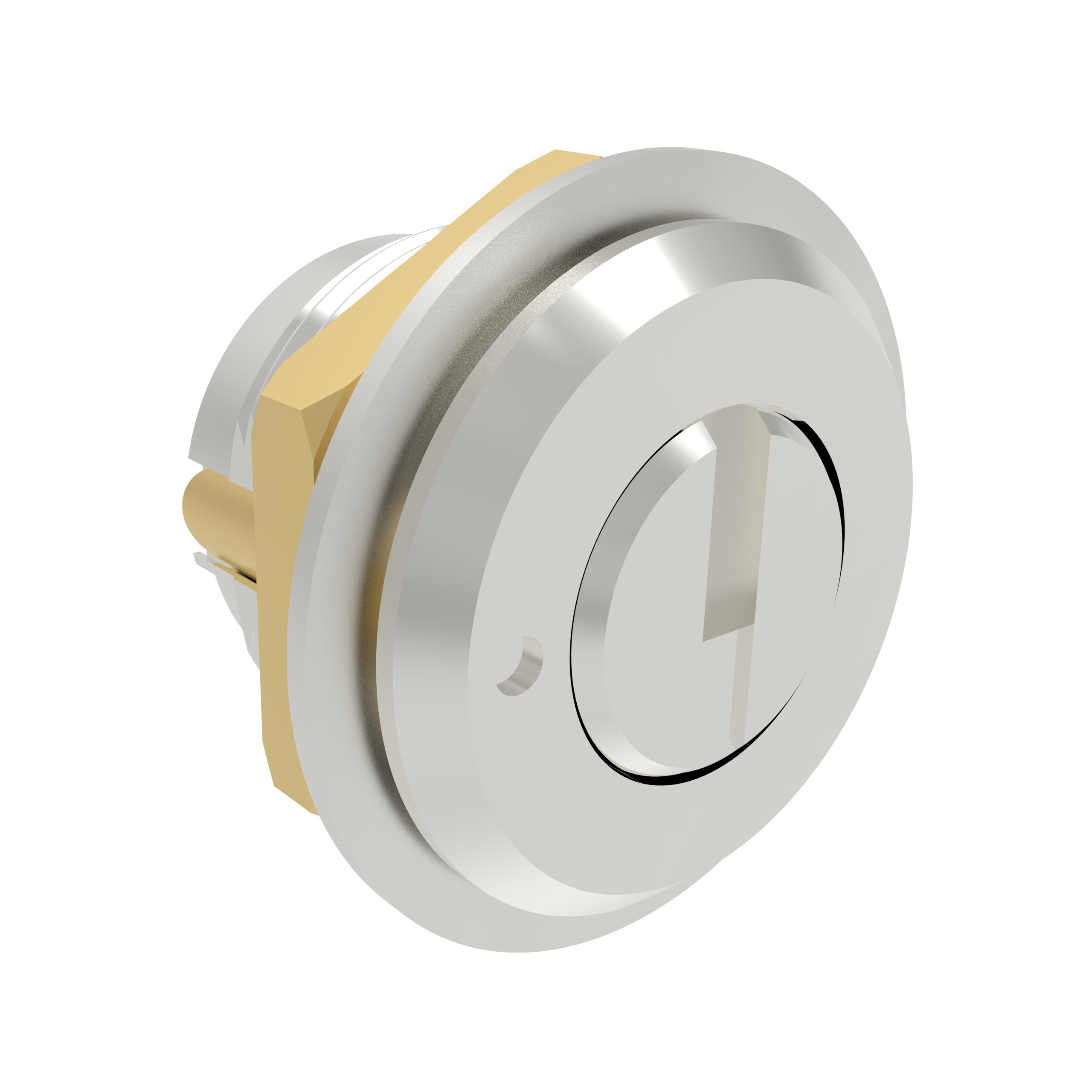
A locker lock is designed for one purpose: to keep the door shut until the right person opens it. It’s compact to fit thin metal or laminate doors, and can be opened with a key, code, card, or even a user’s own padlock. Many models let you swap cores or reset codes without replacing the whole unit. Unlike regular door locks, locker locks are built for constant use in places like schools, public locker areas, or factory floors. They need to be quick, durable, easy to manage in bulk, and simple to fix—whether that means resisting dents and rust or changing a battery fast. The goal is always the same: secure enough to stop casual theft, but convenient enough for everyday use.
How Does a Locker Lock Work?
At the simplest level, a locker lock just keeps a latch or bolt in place until it gets the right signal to release. That signal can show up in different ways. With a key, you just slide it in and turn—once it matches the lock inside, the latch pulls back. With a code, you spin the dial or set the wheels until the right numbers line up, and then the bolt lets go. With electronics, a PIN, card, or fob is checked by a small reader, and if it matches, a motor snaps the latch open. However it’s done, the idea is the same: once the latch moves, the door opens. The real difference between systems is how secure they are and how easy they are for people to use day after day—in schools, transit hubs, or workplace lockers.
What Types of Locker Locks Are There?
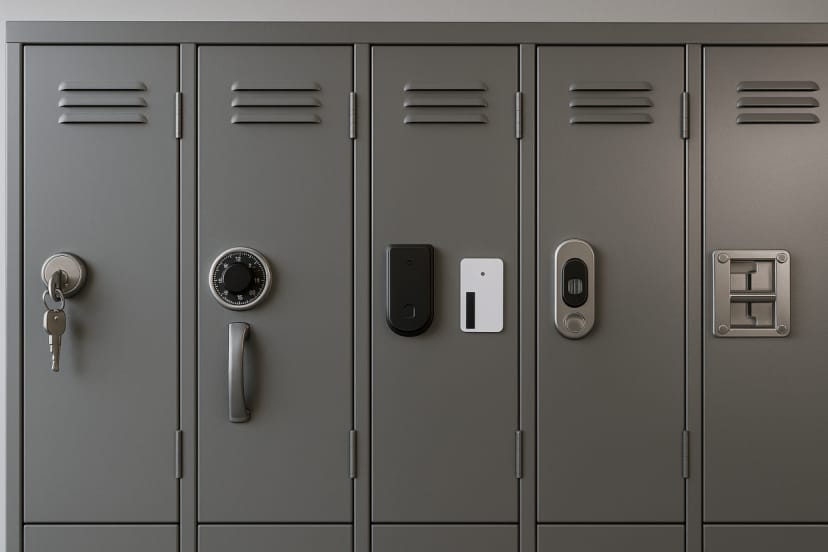
Keyed Cam Locks
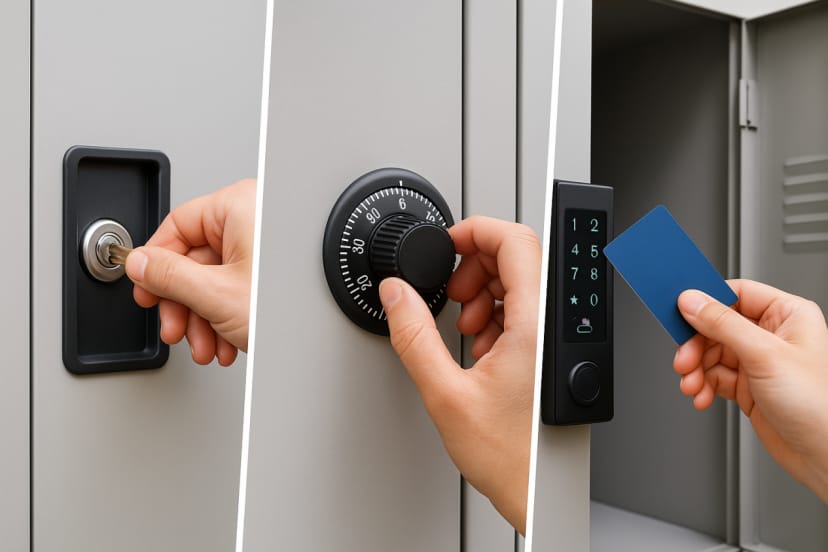
The classic style. A small key turns the cylinder and moves a cam to keep the door shut. They’re cheap, reliable, and easy to swap if one breaks, but once a key is lost or copied, control quickly slips away.
Padlock + Hasp
A simple loop on the door where users add their own padlock. It works well for shared or short-term lockers in public areas. Low cost and flexible, but security depends entirely on what padlock people choose.
Mechanical Combination
Instead of a key, you line up numbers on a dial or wheels. Once the code matches, the latch opens. It saves the trouble of handing out keys and suits schools or group use, but forgotten codes are a constant headache.
Electronic / Digital
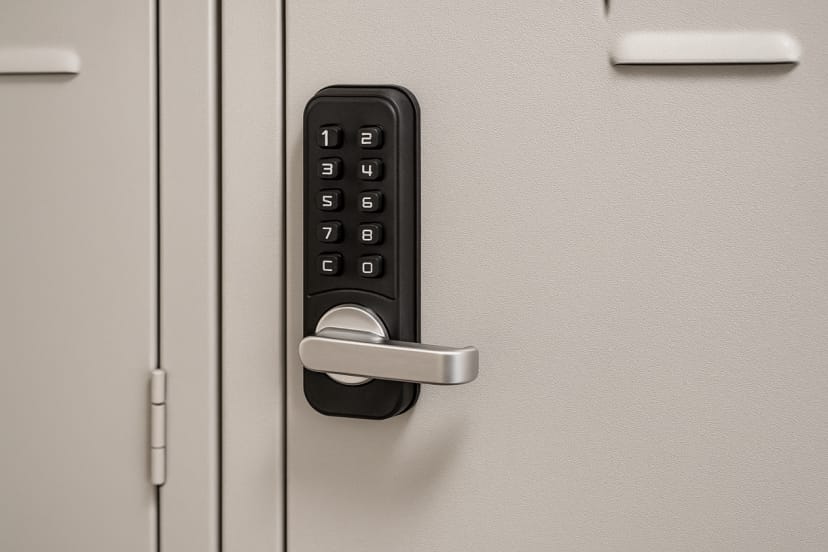
Opened with a PIN pad, card, or fob. Useful in industrial lockers or managed storage because access is easy to reset and track. Strong on control, but they need batteries or wiring, so upkeep is part of the deal.
Smart / Biometric
The top tier for strict access control—labs, research sites, or restricted storage. A fingerprint or phone credential opens the lock in seconds, with no keys to lose or codes to share. They’re fast and secure, but also expensive and tied to steady power.
What Types of Locker Locks Does Fornd Provide?
Fornd doesn’t just make hinges—it also has compact locks that suit cabinets and lockers. Here are a few that show how they handle materials and finishes:
Image | Product Code | What It Is | Why It Fits Lockers | Link |
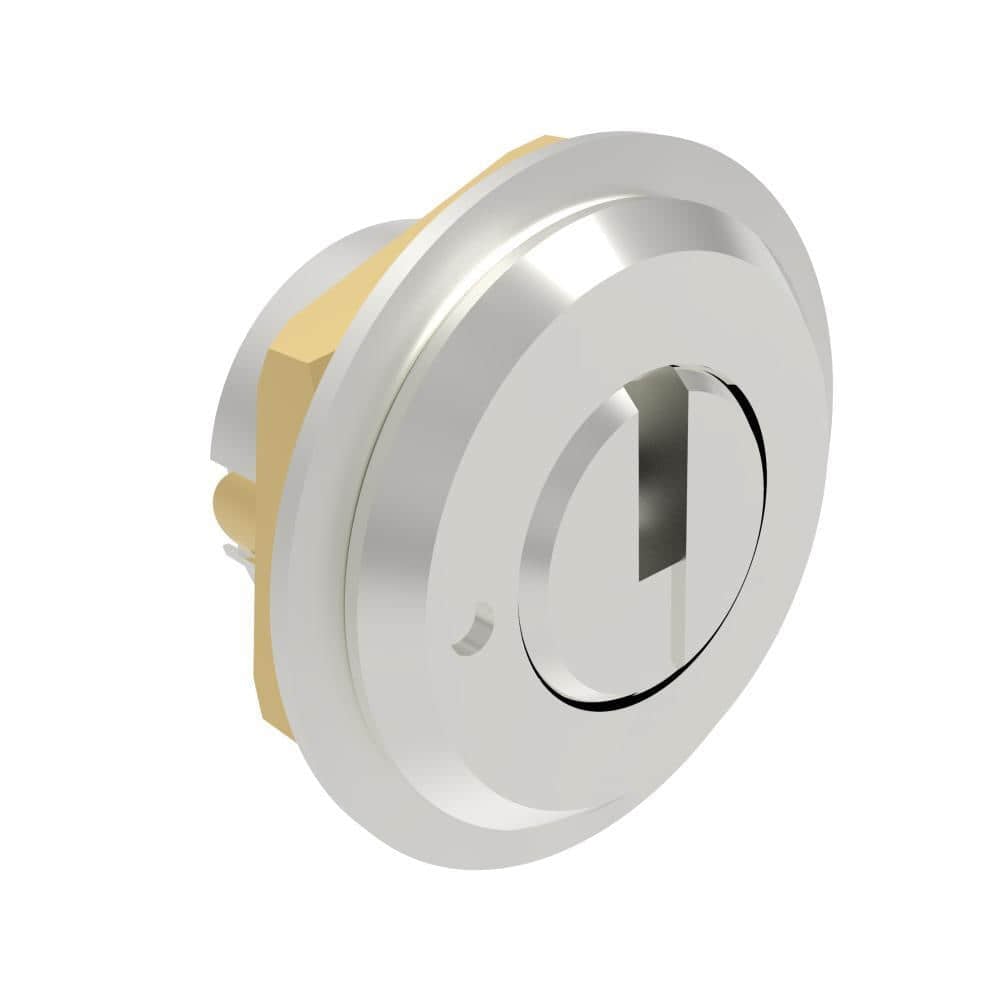
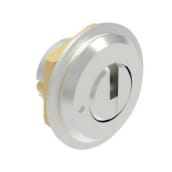
| D3-1312-001 | Kappa lock (keyed quarter-turn)
| Compact brass, chrome finish; classic keyed cam action for thin metal doors | |
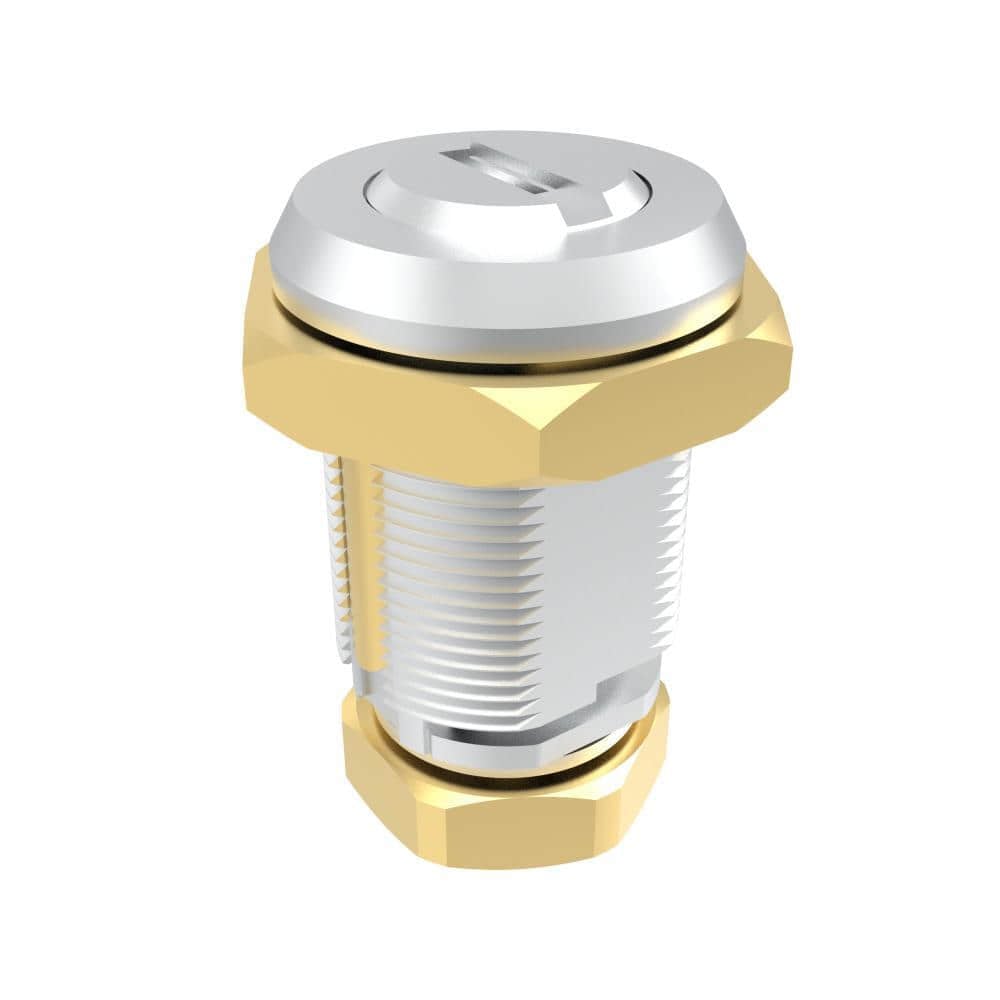
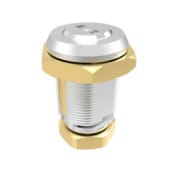
| D3-1311-001 | Kappa lock (keyed quarter-turn) | Similar keyed mechanism with multiple key variations; easy swap-out core | |
| D3-1604 | Kappa lock (ATM / cabinet style) | Higher key-variation brass core; used on cabinets and kiosks—works for managed lockers | |
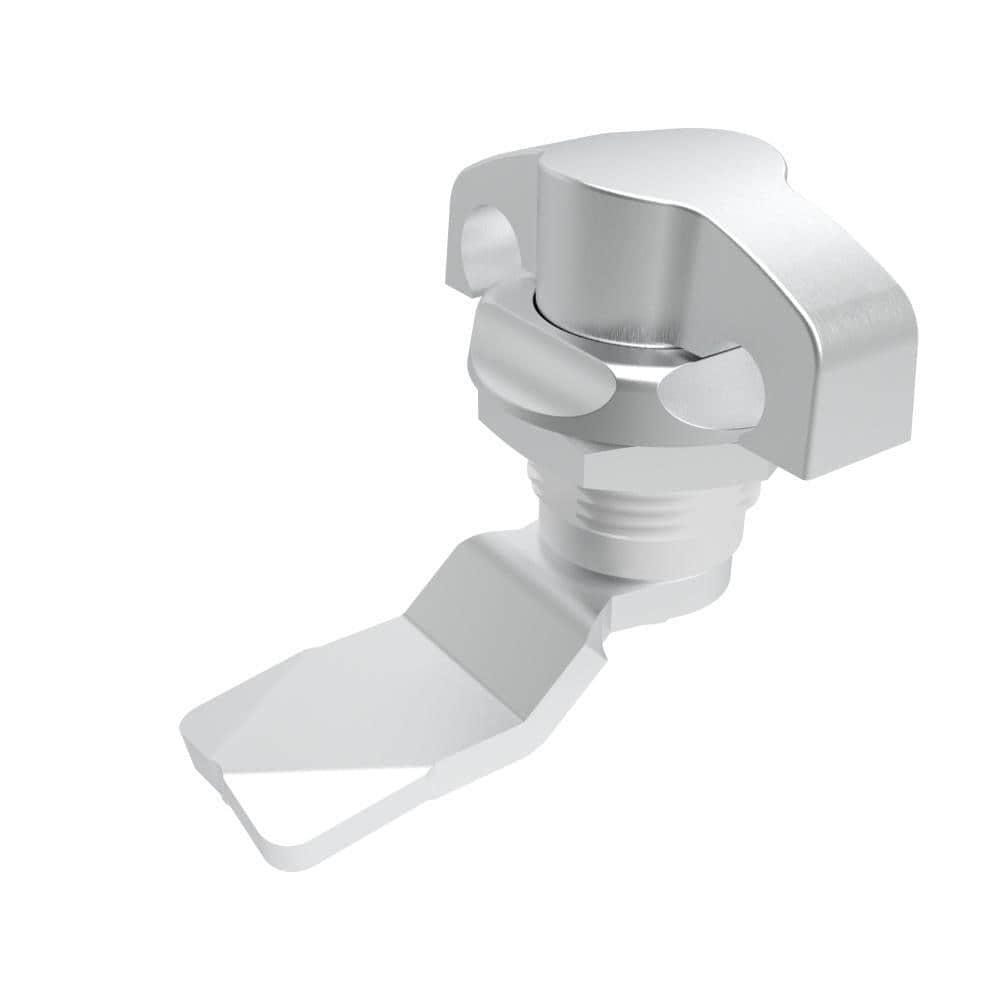
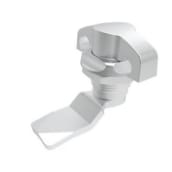
| D1-1413-180-A1 | Quarter-turn with wing knob | Tool-free daily use; latch engages with a simple 90° turn | https://fornd.com/product/quarter-turn-locks-with-wing-knob-d1-1413-180-a1 |
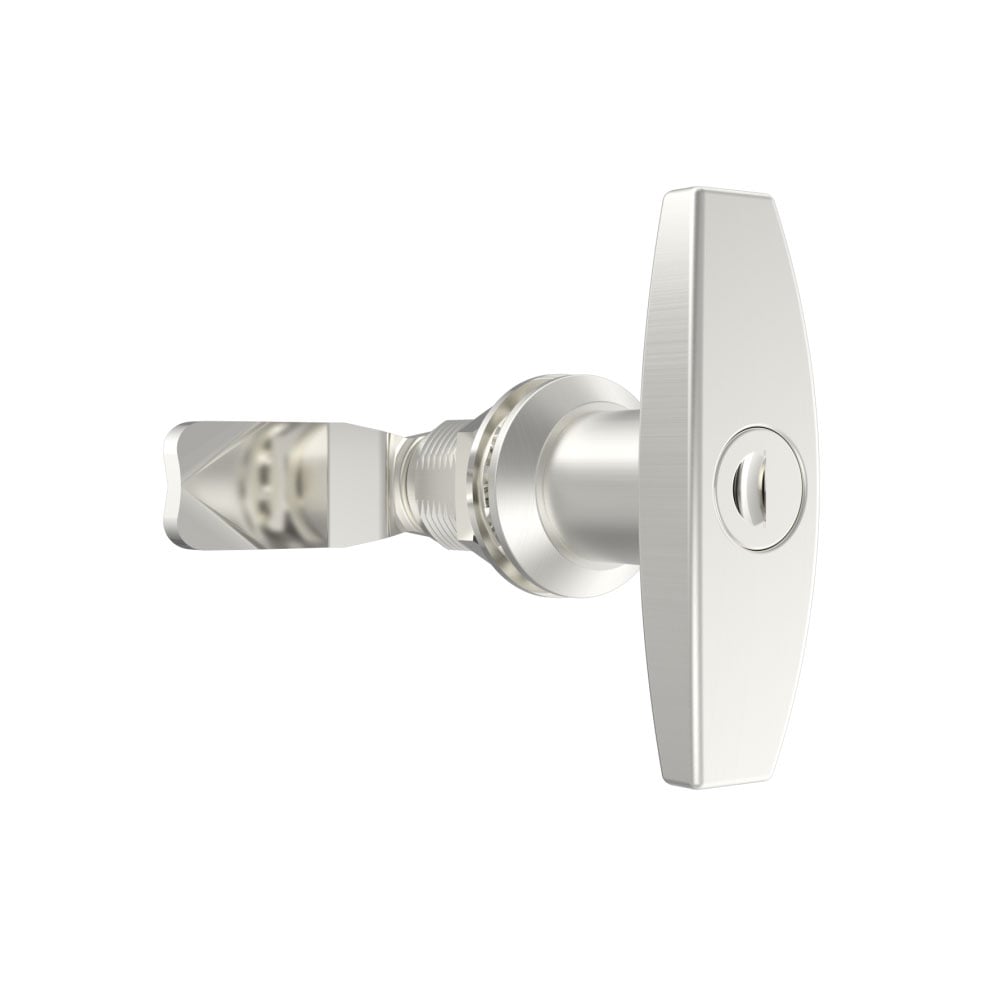
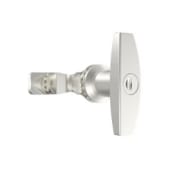
| B-1201-130-A1 | T-handle quarter-turn (keyed) | Larger grip for gloved hands; stainless body, IP65 options on page | https://fornd.com/product/t-handle-quarter-turn-lock-b-1201-130-a1 |
What Are the Different Locking Mechanisms?
Most locks still work the traditional way: you put in a key, turn it, and the latch slides back. It’s simple, cheap, and has been around forever. The trouble is in the keys—once they’re lost or copied, the lock doesn’t mean much. Combination locks avoid that problem by using numbers instead. Spin a dial or line up wheels until the code matches, and the door opens. No keys to hand out, but people forget codes all the time.
Electronics changed the game. Instead of turning metal, you punch in a PIN, tap a card, or use a fob, and a small motor does the work. It’s easy to reset access when people come and go, which makes it useful for lockers that serve a lot of users. The only catch is power—batteries need changing, and wiring has to be maintained.
At the very top end are biometric and reinforced designs. A fingerprint reader or phone signal can open the lock in seconds, no keys or codes needed. And in some cases, the mechanism itself is built heavier, with things like extra bolts or tamper sensors, more like a safe than a locker. These aren’t for everyday use—they cost more and need stable power—but in labs or secure storage, that trade-off makes sense.
Where Do Locker Locks Work Best?
Manufacturing Floors & Plants
Shop floors stay busy, with people changing shifts and gear all the time. Locks here need to be strong and easy to swap if one breaks. Cam locks do the job, but PIN or RFID locks make it simpler to control access for different teams.
Warehouses & Distribution Centers
Warehouses see constant movement of staff and goods. Electronic locks with PINs or cards are easy to reset when staff changes. For low-risk storage, a basic cam lock is usually enough.
Utilities & Critical Infrastructure
Power plants, water stations, and telecom sites are tough places for any lock. Rain, dust, and constant checks are normal. That’s why stainless or weather-rated locks are the safer pick. In many cases, electronic locks also help by keeping a record of who came in and when.
Labs & Controlled Facilities
In labs or pharma storage, the goal is simple: don’t let the wrong person in. Key cards or fingerprint locks make this easier, since there’s no risk of keys being passed around. Smooth, sealed finishes are also handy here—they’re easier to wipe down and keep clean.
Transit & Public Infrastructure
Airports and stations have lockers used by different people throughout the day. Coin-return, PIN, or card systems let users come and go without staff handing out keys, and maintenance stays simple.

How Do Different Types Compare?
Before choosing a locker lock, it helps to see how the main types stack up. Each design has its own balance of security, convenience, and upkeep. Some are cheap and flexible, others are more advanced but costlier. Here’s a quick side-by-side look to make the differences clear.
Lock Type | Security | Ease of Use | Cost | Maintenance |
Keyed Cam | Medium | Simple | Low | Key control |
Padlock-Hasp | Low–Medium | Flexible | Low | User dependent |
Mechanical Combo | Medium | Easy once code known | Medium | Reset when codes are forgotten |
Electronic | High | Very easy | Higher | Battery changes |
Biometric | Very High | Easiest | Highest | Power and calibration |
FAQs
What’s the Difference Between a Locker Lock and a Door Lock?
A locker lock is built for quick, constant use—think opening and closing several times a day. A regular door lock is heavier and better for long-term security, not for constant cycling.
Do Electronic Locker Locks Kill Batteries Fast?
No. Most only draw power when you unlock. A set of batteries can last for months, sometimes close to a year.
What If I Forget the Code on a Combo Lock?
Happens all the time. Usually there’s a reset tool or master key that a manager can use to get it back on track.
Which Locker Lock Works Best Outdoors?
Go with stainless or weather-rated electronic locks. Cheaper zinc or bare alloy locks rust fast in rain or salty air.
Ready to upgrade your lockers? Check out https://fornd.com/ to find full lock range, and find the model that fits your setup.