
What Is A Cabinet Latch?
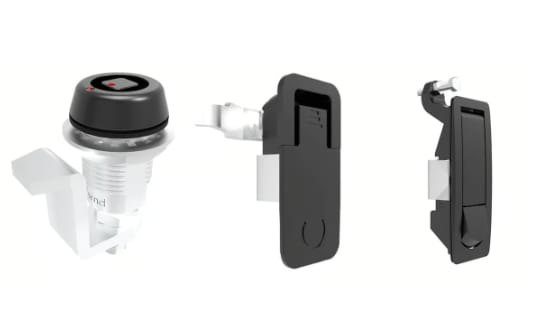
A cabinet latch is a mechanical fastener used to secure cabinet doors or drawers, preventing them from swinging open unintentionally. These devices come in various designs, from simple spring-loaded catches to more complex magnetic or roller mechanisms. Their primary function is to maintain a closed position, ensuring that the contents of the cabinet remain safely stored and that the door aligns properly with the cabinet frame. Cabinet latches are essential components in furniture, cabinetry, and various enclosures, offering both functional security and aesthetic appeal.
Types of Cabinet Latches You Should Know
Cabinet latches are essential hardware components that keep cabinet doors securely closed until you need to access the contents inside. While they may seem like minor details in your home or office, choosing the right type of cabinet latch can significantly impact functionality, appearance, and security. This guide explores the various types of cabinet latches available on the market today, helping you make informed decisions for your cabinetry needs.
Magnetic Cabinet Latches
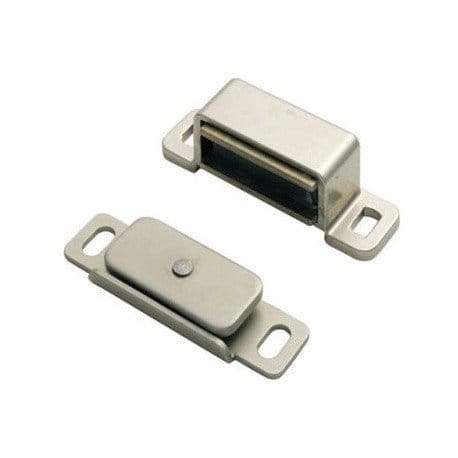
Magnetic cabinet latches have gained significant popularity in contemporary cabinetry due to their sleek, minimalist design and quiet functionality. Operating on a simple principle, these latches employ a magnet concealed within the cabinet frame, which attracts a metal strike plate affixed to the door, ensuring a secure closure when the door is brought near the frame. Key features contributing to their appeal include the invisible hardware, which creates a seamless aesthetic when doors are shut, and their silent operation, eliminating any clicking or mechanical noises. Their ease of installation, typically requiring only basic tools, and the availability of adjustable holding power through varying magnet strengths, add to their practicality. Furthermore, the absence of moving parts significantly reduces the likelihood of mechanical failures over time, ensuring long-lasting reliability.
Best Applications
· Modern, handle-free cabinet designs
· Kitchens and bathrooms where clean aesthetics are desired
· Child-safety applications (when used with childproof mechanisms)
· Cabinets that don't require strong holding force
Push-to-Open (Touch) Latches
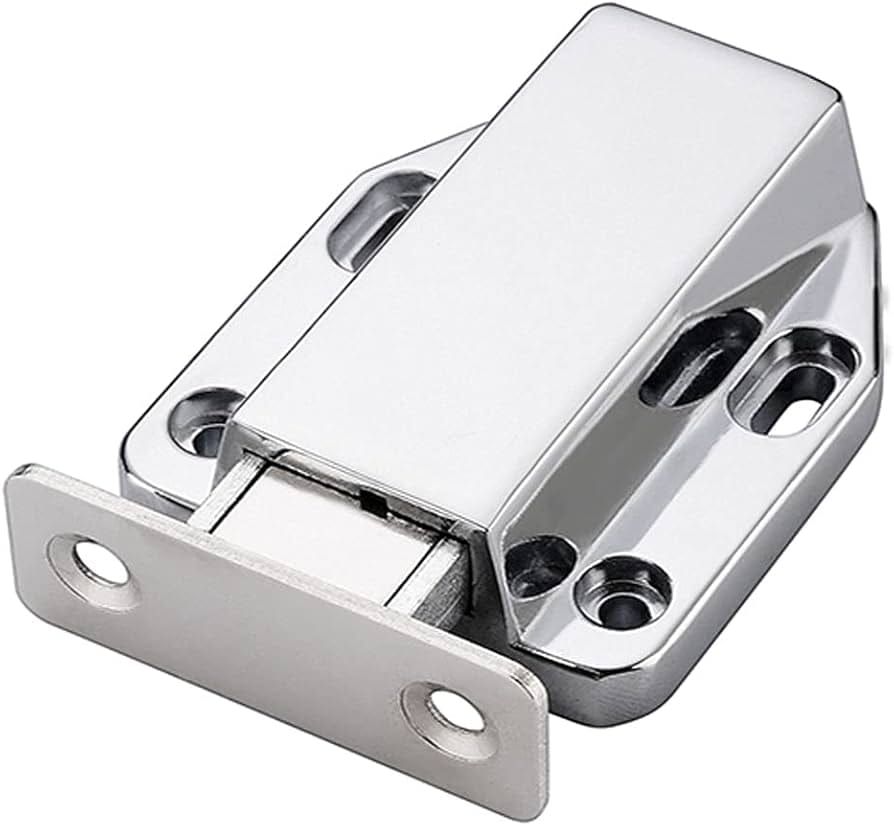
Push-to-open latches, or touch latches, offer a sleek, handle-free solution for cabinet doors, enabling opening with a simple press. Installed within the cabinet, these latches utilize a mechanical or magnetic mechanism that releases the door upon pressure, allowing it to open slightly. To close, a simple push re-engages the latch. Key features include the clean aesthetic of handle-free operation, supporting minimalist and contemporary designs, and the smooth push-open action provided by a spring-loaded mechanism. Available in various tensions to accommodate different door sizes and weights, and in both mechanical and magnetic options with unique performance characteristics, these latches offer versatility. Some models also feature adjustable release sensitivity for fine-tuning the opening action.
Best Applications
· Modern, handle-less cabinetry
· Home entertainment centers
· Office furniture
· Situations where hands might be full or dirty
· Applications where a clean, uninterrupted appearance is desired
Spring-Loaded Ball Catches
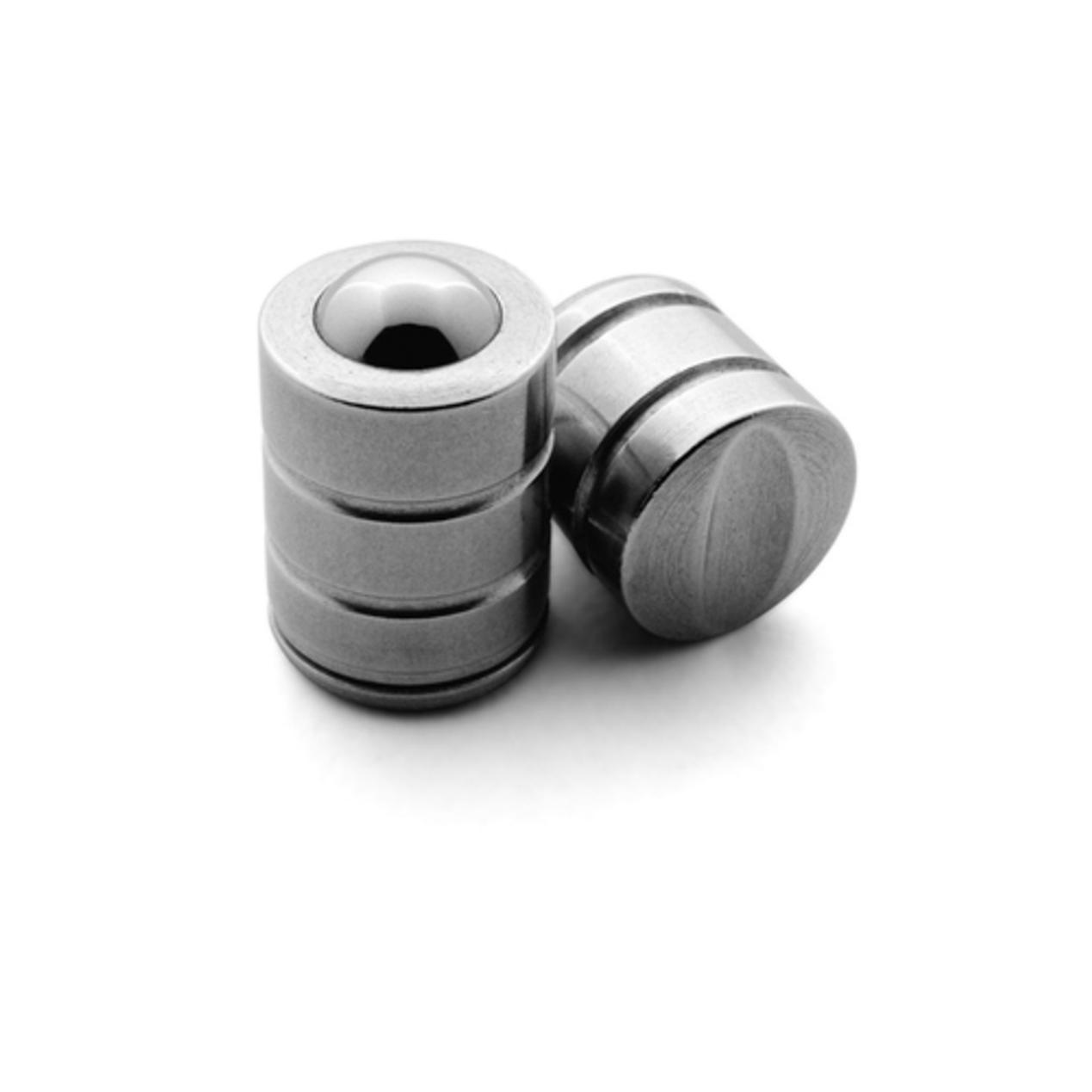
Spring-loaded ball catches are a classic and prevalent cabinet latching solution, known for their reliable mechanical function. They operate through a spring-loaded ball bearing that engages with a depression on the strike plate, using spring tension to maintain a closed position until sufficient force overcomes the resistance. Key features include a positive mechanical engagement, providing a distinct "closed" feel, and audible feedback in the form of a clicking sound upon closure. Available with adjustable tension through varying spring strengths, they cater to diverse door weights and sizes. Their small, discrete profile ensures minimal visibility when installed, and their economical nature makes them a budget-friendly option.
Best Applications
· Traditional cabinetry
· Applications requiring audible confirmation of closure
· Cabinets in moving vehicles (RVs, boats) where positive closure is needed
· Budget-conscious projects
· Retrofit applications
Compression Latches
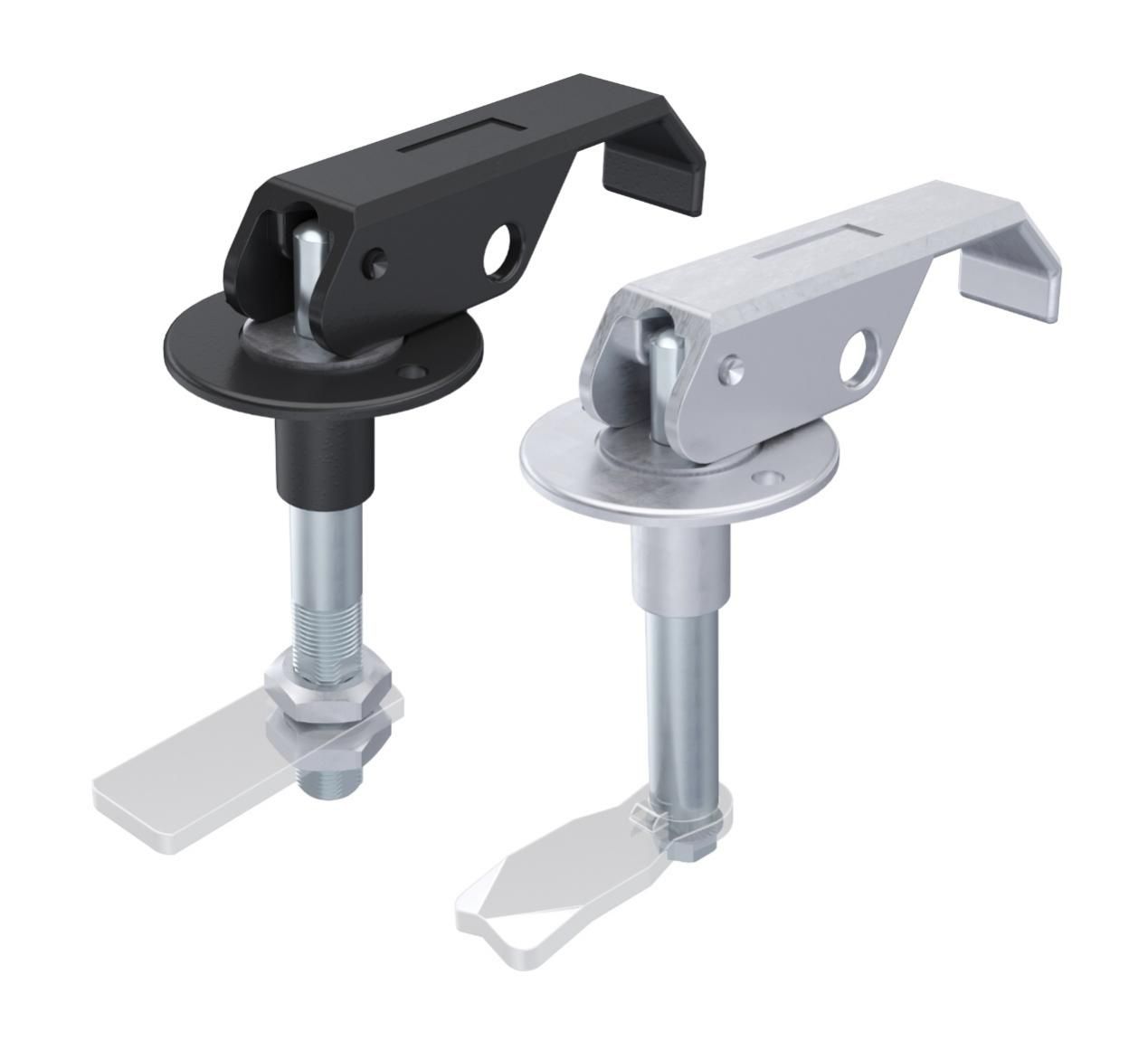
Compression latches are specialized fasteners that offer more than just door closure; they provide a tight seal by compressing against a gasket or seal, making them indispensable in applications requiring environmental protection. These latches function by pulling the door firmly against the frame upon engagement, creating the necessary compression. Typically operated by a handle, knob, or lever, they feature a rotating mechanism to engage or disengage the latch. Key features include their ability to create a tight seal, crucial for dust, moisture, or sound control, and adjustable compression, allowing fine-tuning for optimal sealing performance. Their robust design provides enhanced security, making them more resistant to forced entry, and when used with appropriate gaskets, they offer excellent weather resistance. Industrial-grade options are also available, catering to the demanding requirements of heavy-duty applications.
Fornd Compression Latches
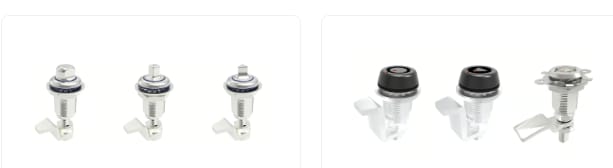
The range includes Fornd's Cam Latches, Lever Latches, Self-Adjusting Latches, and Llift & Turn Latches for secure closing solutions that are very versatile. These latches are engineered in a way that enables them to provide reliable compression thereby leading to assured sealing and fastening security in several applications.
The Compression Latches by Fornd prove quick installation and quick operation, take care of effective insulation from water and dust, and take away any troubling vibration and noise. It has key locking and tool security provisions; thus, it can uphold security by keeping away unauthorized access. 1 Offered adjustable versions can be exploited to absorb dimensional changes and gasket settings, maintaining an assured result in the long run. A number of drives and handles are provided by Fornd, which can easily be attuned to meet quite specific requirements for applications.
Best Applications
· Outdoor cabinetry
· Industrial enclosures
· Audio/visual equipment cabinets
· Climate-controlled storage
· Laboratory or medical cabinetry
Rotary Latches
Rotary latches are designed for applications requiring high security and positive locking, ensuring doors remain firmly closed. They function by employing a rotating mechanism that engages and hooks onto a strike pin or plate, providing a robust and reliable closure. These latches are typically activated by handles, knobs, or push buttons that connect to the internal latch mechanism. Key features include their positive locking action, which securely holds doors in place, and their seamless integration with handles, often working in conjunction with decorative hardware. They offer multiple actuation options, including handles, push buttons, and key locks, catering to diverse security and convenience needs. Furthermore, rotary latches are available in heavy-duty capacities, suitable for large or heavy doors, and weather-resistant options, making them ideal for outdoor applications.
Fornd Rotary Latches
The Fornd Turning Latch System offers a reliable way to hold door panels, combining a simple push-to-close system with the possibility of hidden locking at single or multiple points. Mechatronic and mechanical versions, made of strong materials for varying conditions, Fornd Turning Latches can be used as flexible security methods. The mechanical actuator can ensure versatile security through manual or keyed operation while mechatronic actuators can provide a concealed and often electronically controlled locking solution.
Key benefits are simple push-to-close friendly design, secure hidden door lock, and compact size options, choice of single or multi-point drive systems, and availability of mechanical and mechatronic door lock solutions. Wide choice of mechanical and drive designs along with manual and keyed mechanical drive options add up to a solution tailored to attend diverse security and different operational requirements.
Best Applications
· RV and marine cabinetry
· Storage requiring secure closure
· Outdoor cabinets
· Transportation applications
· Cabinets containing valuable items
Cabinet Latches Considerations
To select the appropriate cabinet latch for their application, engineers should use the following application criteria to narrow down their decision.
Material Considerations
Engineers can choose from a variety of latch materials, including plastic, steel and stainless steel. The environment where the cabinet latch will be used will largely determine the material type that is needed. A latch may be operating in a manufacturing environment, which would call for different material requirements than a cabinet located within a kitchen.
Force Requirements
The amount of force required to open a door can also dictate the type of cabinet latch used. Cabinet latches require different levels of force in order to access the interior of the cabinet. The material chosen can play a factor in the force required to open the cabinet door as well.
Panel Thickness
An obvious requirement for a cabinet latch is the thickness of the cabinet panel. If the cabinet is too thick or thin to hold a certain latch, the latch would not be an ideal choice for the application. Examining the panel thickness before selecting a latching solution can help engineers to avoid making changes to a design later in the process.
Actuation Method
One of the defining characteristics of a cabinet latch is the method of actuation. Engineers should carefully consider the unique needs of the end user and what method is best for their environment. For example, a user who wears gloves all day may not be able to open certain types of cabinet latches. Engineers can choose from cabinet latch options that allow users to push, pull, lift, turn or slide in order to access the cabinet interior.
Security
Keeping the contents of the cabinet secure may also be a design concern for engineers. Cabinets that house high value items and sensitive documents may call for a cabinet latch with a locking system. Lock and key systems can be integrated into cabinets to secure their contents. Certain cabinet latches can only be accessed using a special key or tool designed to work with a specific head style. Incorporating a locking cabinet latch can help ensure that the cabinet will only be accessed by users who are authorized to do so.
About Fornd
Fornd, a seasoned manufacturer of industrial cabinet locks and hardware, offers a broad spectrum of solutions for industrial applications. Their product line includes high-quality electronic locks, hinges, handles, and latches, showcasing their deep industry expertise. Discover their comprehensive offerings on the Fornd website: https://fornd.com.