
How to Protect the Mailbox with Tubular Cam Locks?
As an important communication tool in daily life, the mailbox holds the security of important items such as letters and bills. However, most traditional email locks have a simple structure, a high mutual opening rate, and low security, which poses a serious threat to email security. Choosing a safe and reliable CAM lock to protect the mailbox is precisely the key to safeguarding privacy and property security.
As a professional hardware manufacturer, Fornd, with its production system and rich industry experience, has developed a series of tubular CAM locks suitable for mailbox security, ensuring that mailboxes can maintain reliable security performance in various environments.
What Is The Tubular CAM Lock?
A CAM lock padlock is a compact lock body with a key lock core that can rotate a metal rod called a CAM. Turning the key will swing the CAM behind the lock or frame lip, locking the door or drawer. Since the CAM can be straight, offset or hook-shaped, it is impractical for this mechanism to be applicable to thin doors and panels with door bolts or heavy buckles. The result is clean, fast and one-handed entry, suitable for frequent hole opening in commercial and industrial sites.
The mailbox CAM lock is specially designed to meet the unique requirements of the mailbox. It needs to be weather-resistant because mailboxes are often exposed to the natural environment. It also needs to be secure enough to protect the contents of the email from unauthorized access. In addition, it should be easy to operate because users will open and close their mailboxes regularly.
Fornd for CAM lock introduced overall, you can learn more about: https://fornd.com/category/locks-and-latches-industrial-solutions
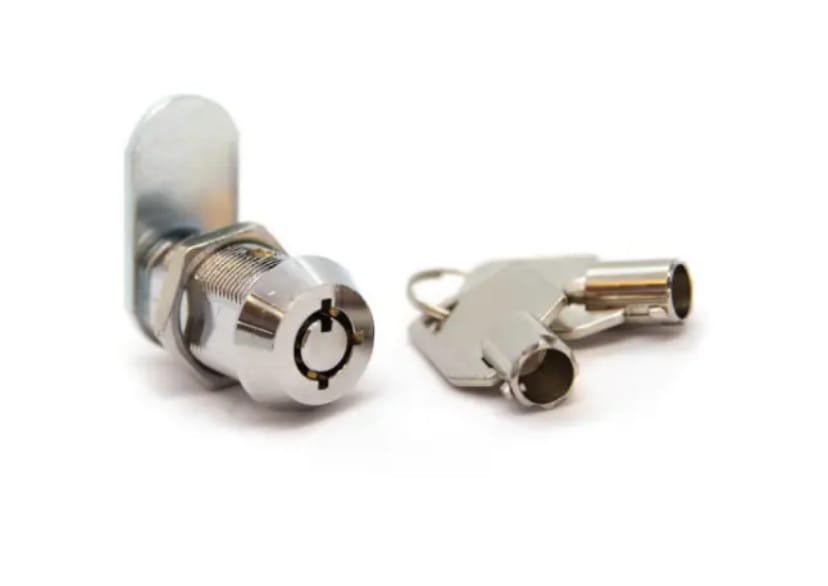
What Are The Advantages of Tubular CAM Locks?
The tubular CAM lock is suitable for protecting mailboxes due to a series of "small but precise" designs and solid performance advantages:
Circular Keyway
Common lock-picking methods are ineffective for this type of lock. Because the most notable feature of the tubular lock is its circular keyway, which perfectly corresponds to the cylindrical shape of the tubular key, ordinary keys or other tools cannot be inserted into the lock hole.
Radial Pin Arrangement
Because the pins are arranged in a circular pattern rather than in a straight line, this makes them more complex, thereby enhancing safety and accuracy.
High Durability
The lock body is generally cast from stainless steel, brass or zinc alloy. It can still work normally after being opened thousands of times without loosening or deforming.
Smooth Operation
The round pins and keys are perfectly arranged together, giving a smooth and low-friction twisting sensation. Even if you frequently open and close the mailbox, it won't get stuck.
Enhance Security
The tubular CAM lock has a complex structure and a limited number of access points, thus it has a strong resistance and can withstand forced entry, drilling or collision attacks.
How Do Tubular Locks Differ from Traditional Needle-Type Untoppleable Locks?
Traditional pin glass locks are still widely used, but tubular locks have obvious advantages:
Feature | Traditional Pin Tumbler Lock | Tubular Cam Lock |
Keyway Shape | Flat or Rectangular | Circular |
Pin Layout | Linear | Radial |
Pick Resistance | Moderate | High |
Key Design | Flat Blade | Tubular Cylinder |
Durability | Average | Excellent |
The circular structure of the tube lock not only enhances its tamper-proof property but also improves its reliability in high-usage environments where traditional locks may wear out quickly.
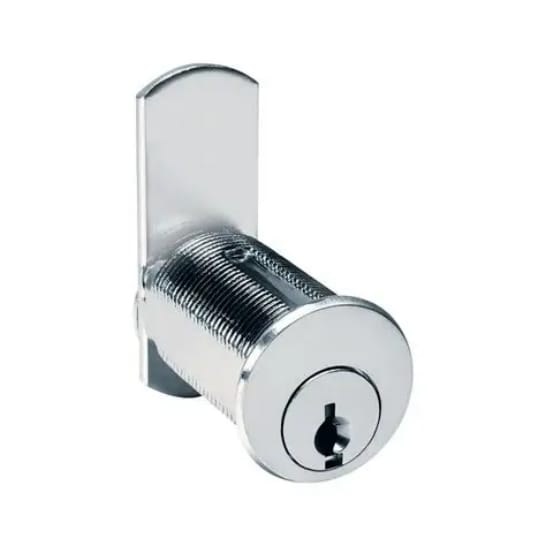
How To Prevent The CAM Lock of The Mailbox From Rusting?
Rust not only damages the appearance of the mailbox, but also significantly reduces the functionality and service life of the CAM lock. To prevent rusting, the following suggestions should be followed:
Material Selection
The foundation of anti-rust CAM locks lies in the materials used in their manufacturing process. High-quality stainless steel is one of the most popular choices. Chromium in stainless steel can form a thin and "invisible" layer of chromium oxide on the metal surface, which serves as a protective barrier to prevent oxygen and moisture from reacting with the steel and causing rust.
Another material is mostly brass. Brass has natural anti-corrosion properties. Over time, copper in brass forms patina, which can prevent the metal from further oxidation.
Surface Treatment
Surface treatment determines whether it can prevent rust. The most common type is galvanization: a layer of zinc is plated on the surface of the lock. Zinc is more reactive than iron and steel. When exposed to moisture or oxygen, zinc will corrode first, and the underlying metal will be safe.
Another type is powder coating. The dry powder is static electricity. It first adheres to the lock shell and then goes into the oven to cure, forming a hard and smooth film that keeps the moisture out. With this layer of film, it is less likely to be scratched and the metal will not rust.
Design Considerations
A well-made cam lock keeps water out by packing a washer or O-ring round the keyhole and any other opening, forming a tight seal that stops moisture reaching the works.
Proper drainage is also very important. Some CAM locks are designed with small holes or channels that allow any water that attempts to enter the lock to drain out. This can prevent water from accumulating inside the lock and causing rust. Mentioned security, like Fornd manufacturing computer case safety lock, provide dual protection of data: https://fornd.com/solution/10
Environmental Adaptability
The mailbox lock must be adjusted and used in accordance with changes in the weather. In humid areas, moisture is always seeking ways to enter. The CAM locks manufactured by Fornd are precisely for this battle, so the metal remains clean and rust-proof year after year. You can browse: https://fornd.com/category/locks-and-latches-industrial-solutions
CAM lock materials and coatings must be capable of expanding and contracting without cracking or peeling, including in both hot and cold regions. This is very important because any damage to the anti-rust coating will cause the metal beneath to rust.
How To Install And Maintain?
• Installation precautions
1. Check door thickness and pick the right lock size.
2. Mark and drill the hole dead-centre; a snug fit keeps the lock tight.
3. Swing the cam a few times—should move free with no catch.
4. Slip the key in and out; if it drags, loosen the nut with a touch.
• Key points of daily maintenance
1. Wipe the outside whenever you see dust.
2. Check the lock tongue activity every quarter
3. Use graphite or dry lock spray; oil just gums up the works.
About Fornd
Fornd still selects high-quality materials such as brass or stainless steel and processes each part according to specifications. We provide detailed traceable data and application suggestions to minimize errors in the production process to the greatest extent.
Go to fornd.com for more information, or leave a message at info@fornd.com. Our team will solve the problem for you until the lock works exactly as you want.
FAQs
Is the tubular CAM lock safe?
Tubular CAM locks are controlled by the arrangement and combination of seven or ten copper pins, which are arranged and combined according to pins of different lengths, preventing tens of thousands of locks from opening each other. The mutual opening rate is low, and its security is much higher than that of ordinary email locks.
How often should maintain it?
Wipe the surface every month and spray a graphite or Teflon lock lubricant every 3–6 months; never use oil.
What makes a tubular CAM lock better than the flat-key lock I have now?
A round keyway and radial pins stop common picks; the same key can’t open two locks by chance.