
In industrial applications, users demand rock-solid reliability from every component—we expect smooth, confident operation: a quick push on the panel, the rotary latch snaps the striker into place with a crisp click, locks securely in one motion, and gives you instant assurance everything’s properly secured—no double-checking needed.
Rotary latches show up everywhere—on trucks, tool cabinets, outdoor boxes, even heavy equipment. They don’t just keep the door shut. They hold it steady against vibration, bumps, and rough use. That’s why they’re trusted where a simple cam lock would fail.
In this post, I’ll walk you through the basics: how the rotary locking mechanism works, what materials matter, when electronic versions are worth it, and how Fornd’s rotary latches compare with the big brands. Real products, real specs, and tips you can actually use.
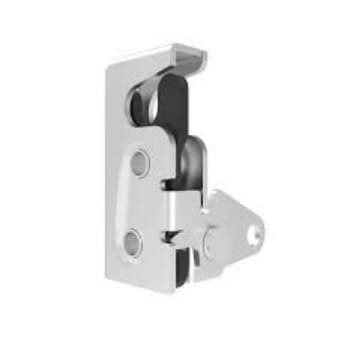
What Is a Rotary Latch System?
At first glance, a rotary latch looks like nothing special—just a block of metal with a slot and some holes. Easy to think it’s a leftover part. But inside, the moving pieces work together to give you that solid click when the door shuts.
• Housing (the shell)
The outer frame. It takes the hits—slams, shakes, weather—so the inside parts don’t get wrecked. It doesn’t look exciting, but without it, the latch won’t last.
• Rotor (the jaw)
The piece that actually does the locking. When the striker slides in, the rotor swings over and grabs it. That crisp click you hear? That’s the rotor snapping shut.
• Striker (the pin)
Just a steel rod at first glance, but it’s what the rotor bites onto. Without it, the latch has nothing to hold, and nothing works.
• Actuator (the release)
The bit you touch. Maybe it’s a lever, a button, or a cable. However it looks, it’s how you open the latch.
• Spring
Small but key. It pushes the rotor back after closing, and gives you that little resistance when you pull to open.
• Bushings or Bearings
Not every latch has them, but when they do, you can feel it. The rotor swings smoother, less grinding, and the latch lasts longer.
• Linkages and Cables
These let you put the handle somewhere else. You pull in one spot, the latch pops in another—handy for hidden or tight spaces.
• Gaskets and Buffers
The quiet helpers. They cut down rattling, keep out dust and rain, and make a heavy door close without a bang.
The pieces seem ordinary, yet when combined they give you that small but satisfying moment—push, click, done.
How the Locking Mechanism Works?
The motion is simple but reliable. Push the door shut, the striker enters the housing, and the rotor swings over it. Click—locked. A spring holds the rotor in place so the door won’t bounce back.
Light-duty models use a single-stage catch. Heavy-duty versions often have a two-stage setup: a halfway hold before the full lock. That way, even if you don’t slam the door completely, it won’t pop back open.
To release, you pull the handle, tug the cable, or press the button. The actuator moves the rotor off the striker, and the door swings free. Close with one motion, open with one motion—that’s the essence of a rotary latch.
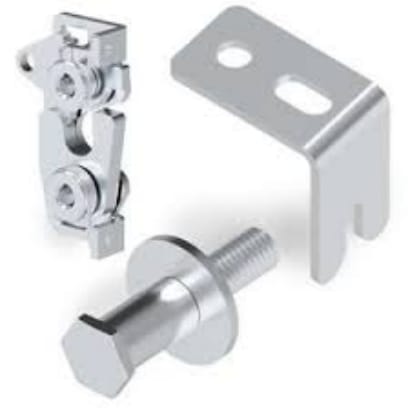
Which Types and Materials Should You Consider?
Here are some common materials and actuation styles that you can choose.
Material Options and Corrosion Resistance
Material | Why People Go For It | What Usually Goes Wrong |
Carbon Steel (Galvanized) | It’s cheap and tough. Gets the job done for most doors. | The zinc coat wears off and rust shows up fast. |
Stainless Steel | Loves bad weather. Stays shiny even near the sea. | Costs more than most folks like. |
Aluminum | Light to carry, easy to fit. Won’t rust. | Too soft. Don’t use it on a heavy lid. |
Zinc Alloy | A “good enough” option if you’re on a budget. | Doesn’t hold up as well under real stress. |
Coated Steel | Paint or chrome makes it look slick and last longer. | Once the coat chips, the rust sneaks in. |
Common Actuation Styles
Style | Why It’s Handy | The Annoying Bit |
Manual Lever | Straightforward. You pull, it opens. | Needs you right at the latch. |
Push-to-Close | Just slam it shut and walk away. | On big doors, that “slam” takes effort. |
Remote Cable / Rod | Perfect when the latch is tucked out of reach. | More parts = more stuff to break. |
Key Lock | Add a layer of safety. | Slows you down every single time. |
Electronic | Push a button and it pops. | Needs wiring, hates dead batteries. |
What Are the Benefits of Using a Rotary Latch?
Load Ratings and Test Cycles
Good latches are built to take a beating. Most are tested to open and close tens of thousands of times without failing. Fornd doesn’t list exact numbers for every model, but they do mention salt spray tests on their site. That means they check how well the latch fights off rust in tough conditions.
Resistance to Vibration, Misalignment, and Impact
Doors and panels don’t stay perfect forever. They shake, they bend, they swell in the heat. A rotary latch has to keep working even when things aren’t lined up right. Fornd points out that their designs have some “wiggle room” in the closed position, so you don’t need to slam the door. It clicks in with less force and still stays shut.
Safety Standards and Certifications
If you’re buying for serious use, check the labels. The big ones are:
• ISO 9227 for rust and corrosion tests
• CE / RoHS for selling in Europe
• ASTM standards for strength and cycle life
These stamps mean the latch isn’t just tough in theory—it’s been proven in a lab.
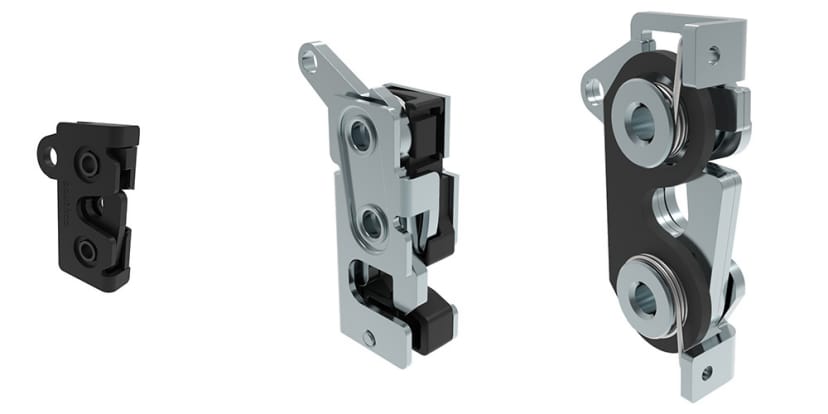
When Does an Electronic Rotary Latch Make Sense?
Advantages of Electronic Actuation
Electronic rotary latches open without you touching the latch itself. You can trigger them with a button, a key fob, or connect them to a bigger access control system. Some even report back if the lock is open or closed. That makes them useful when you need convenience and feedback, not just raw holding power.
Power, Control, and Fail-Safe Options
Electronics always bring extra questions. What happens when the power goes out—does the latch stay locked or does it pop open? Can it handle water, dust, or freezing weather? And don’t forget wiring. Running cables and setting up controls takes more planning than dropping in a mechanical latch.
Where They’re Usually Used
You don’t see electronic rotary latches on a backyard shed. They show up in places where access needs to be smart or remote: compartments on trucks and vans, industrial cabinets that run all day, and equipment panels where workers don’t want to fumble with keys.
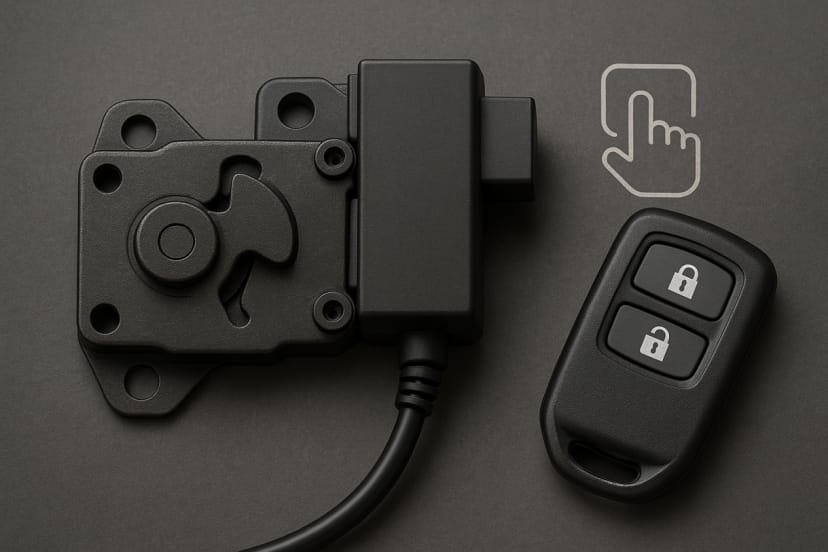
How Does Fornd Compare To Competitors?
Fornd’s rotary latches cover the basics well. You can get them in small or medium sizes, and they come in both left- and right-hand versions. They use galvanized steel with a clean finish, and some models add rubber gaskets to cut down on vibration. One detail I like is the bit of tolerance in the closed position—it means you don’t have to slam the door; it still clicks in tight.
When you stack Fornd up against other brands, the picture is pretty clear: Fornd keeps things simple and sturdy, while some competitors push into heavier or electronic territory.
Product | What Stands Out | Good Side | Trade-Offs vs. Fornd |
Southco R4-em-83-330 | Electronic, 12 V remote release | Great for automated enclosures | Pricey, needs power, hates moisture |
Eberhard 16906 Series | Extra-large, dual-stage build | Super strong, very secure | Big, heavy, takes more space |
Mini Rotary Latch (Left) | Small, compact form | Fits tight spots easily | Not as tough, weaker corrosion resistance |
316 Stainless Over-Center Rotary Latch | Marine-grade stainless | Excellent for saltwater | Heavy, costs more |
So the trade-off is simple: if you want straightforward, durable, and budget-friendly, Fornd gets the job done. If you need electronic access, huge load ratings, or marine-grade stainless, you’ll have to look at the others.
Fornd Products
Image | Model | Quick Take | Link |
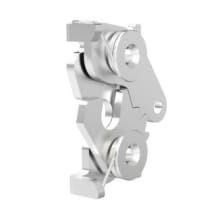
| 3003-41-20-10 | Medium size, two-stage, bottom drive. Galvanized steel, bright finish. Good general-purpose hold. | |
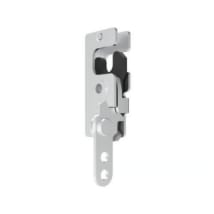
| 3005-05R-A6 | Medium, two-stage, in-line lever actuation. Steel, galvanized. Easy remote pull setup. | |
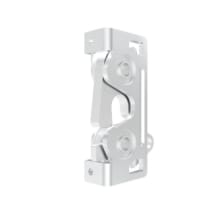
| 3004-41-31-10 | Medium, two-stage, top drive. Steel, galvanized. Clean install when space is tight above. |
FAQs
Can a Rotary Latch Replace a Cam Lock?
It can, and in many cases it’s better. Rotary latches stay shut even when things shake or rattle, so they’re great for vehicles or outdoor boxes. Cam locks are fine for light cabinets, but they don’t hold up as well when the ride gets rough.
Do Electronic Rotary Latches Kill the Battery?
Not really. They only use power when you trigger them. The only time they start draining more is if you add extras like sensors or status lights.
Will a Single-Stage Fornd Latch Stay Shut on a Shaky Door?
Yes. Fornd builds in a little tolerance so the striker doesn’t have to line up perfectly. Add a model with a gasket and it will handle vibration even better.
Are Fornd Latches Okay for Outdoor Use?
For everyday outdoor use, yes. The galvanized finish keeps rusting away. But if you’re putting it near the ocean or in constant rain, stainless steel or a marine-grade option is the safer bet.
Want to buy it? Just head to the site at once and check them out: https://fornd.com/. Everything’s there.