Types of Latches - The Complete Guide
Latches, an indispensable component in industrial environments. Its function, to put it directly, is to ensure safety and maintain order. Industrial locks are different from household locks. They are subject to harsher environmental conditions, more frequent use and higher security requirements.
Simply put, there are five common types of industrial latches: Push To Close Latches, rotary latches, stretch latches, compression latches and quarter rotary latches.
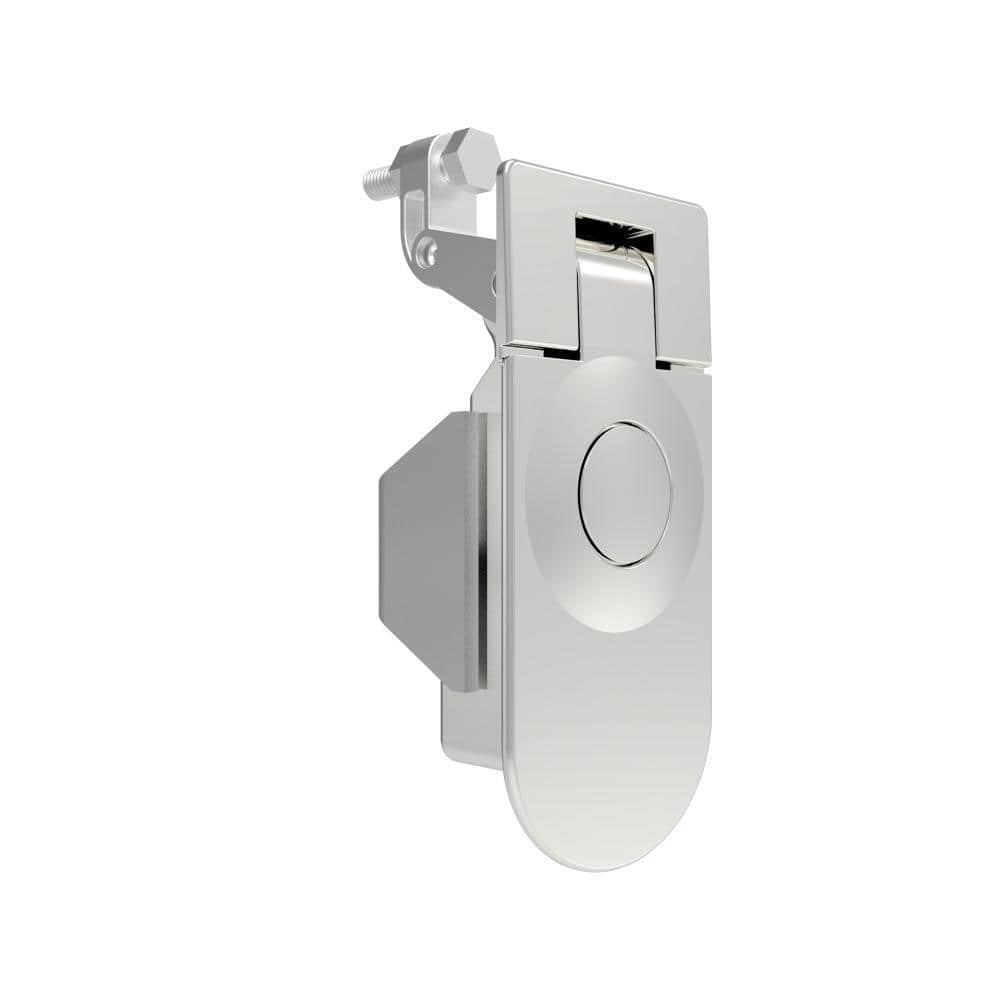
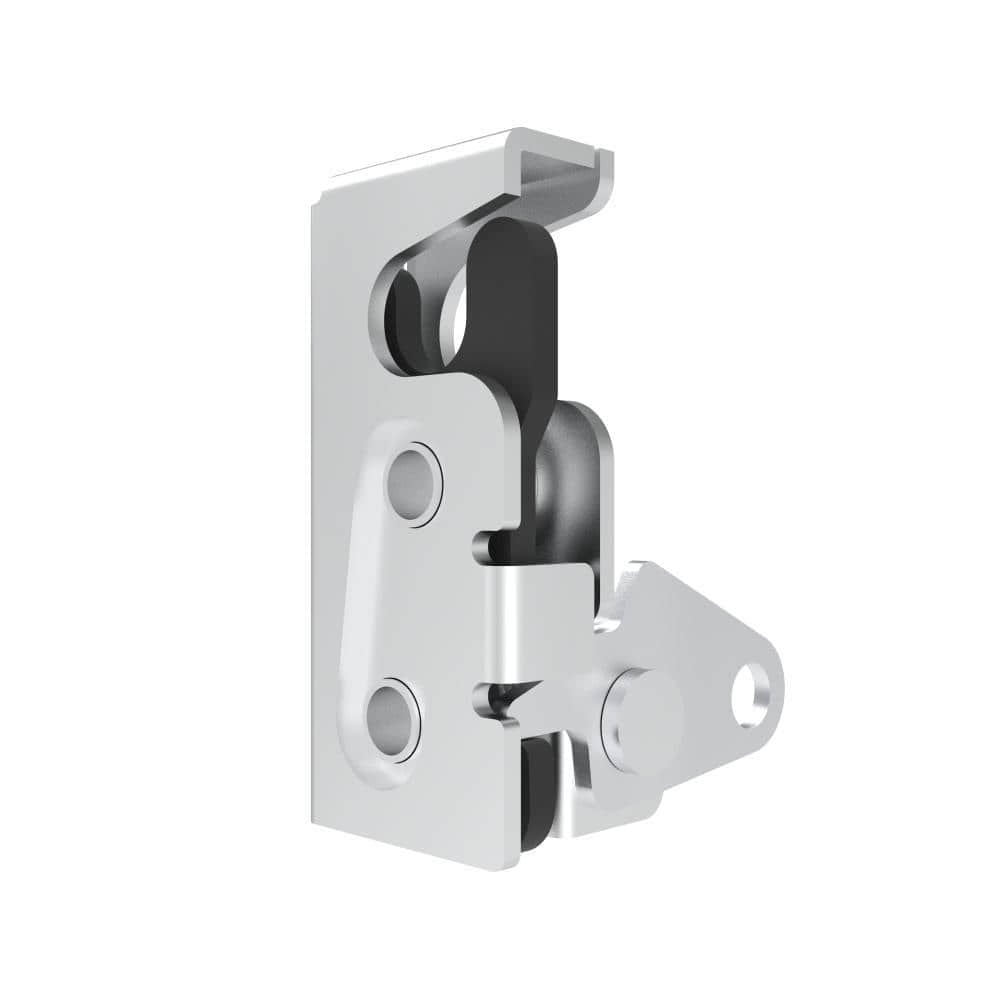
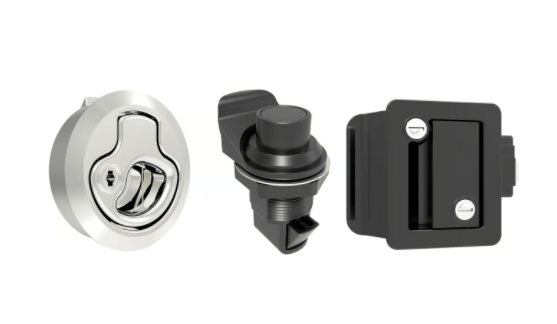
Push To Close Latch – Automatic Closure
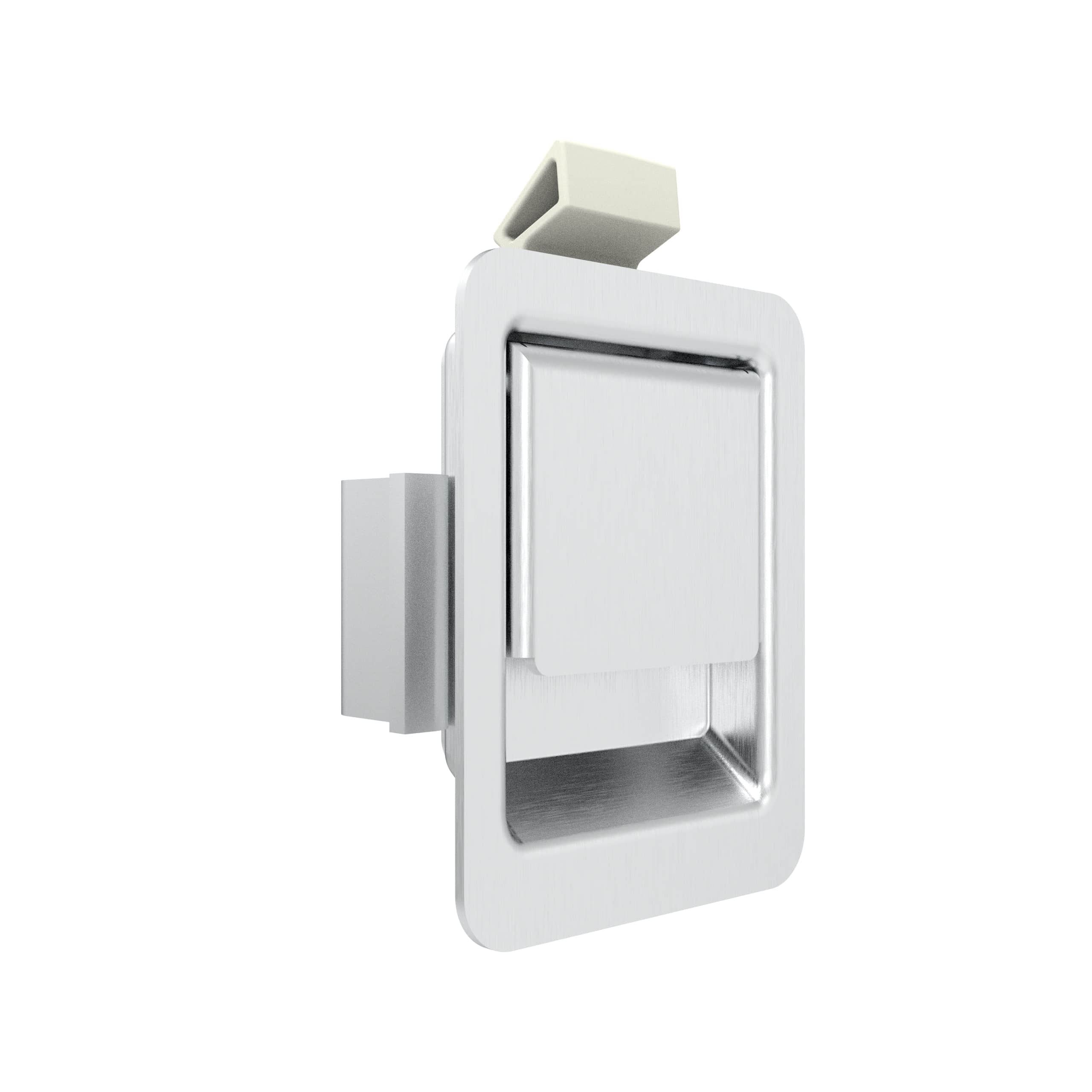
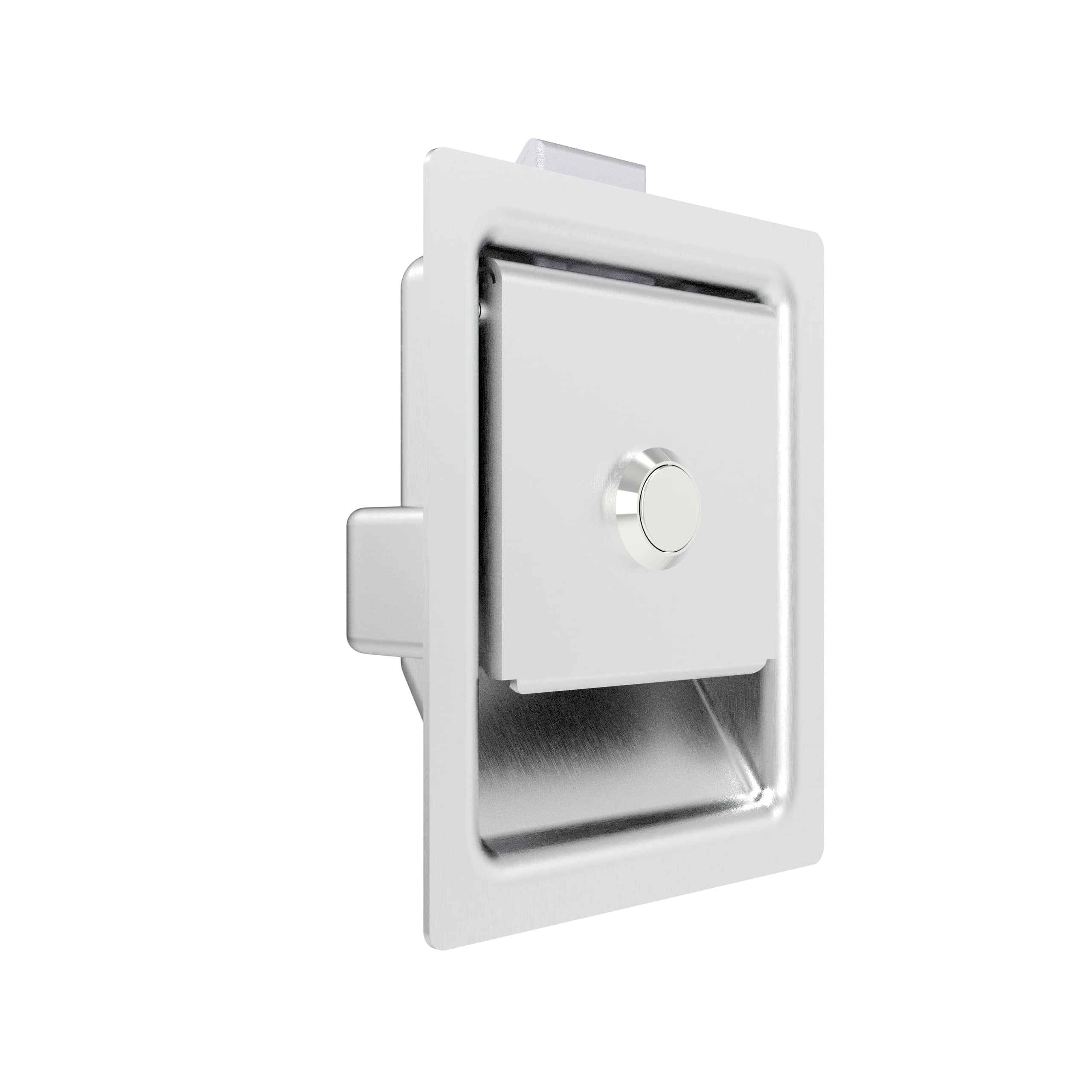
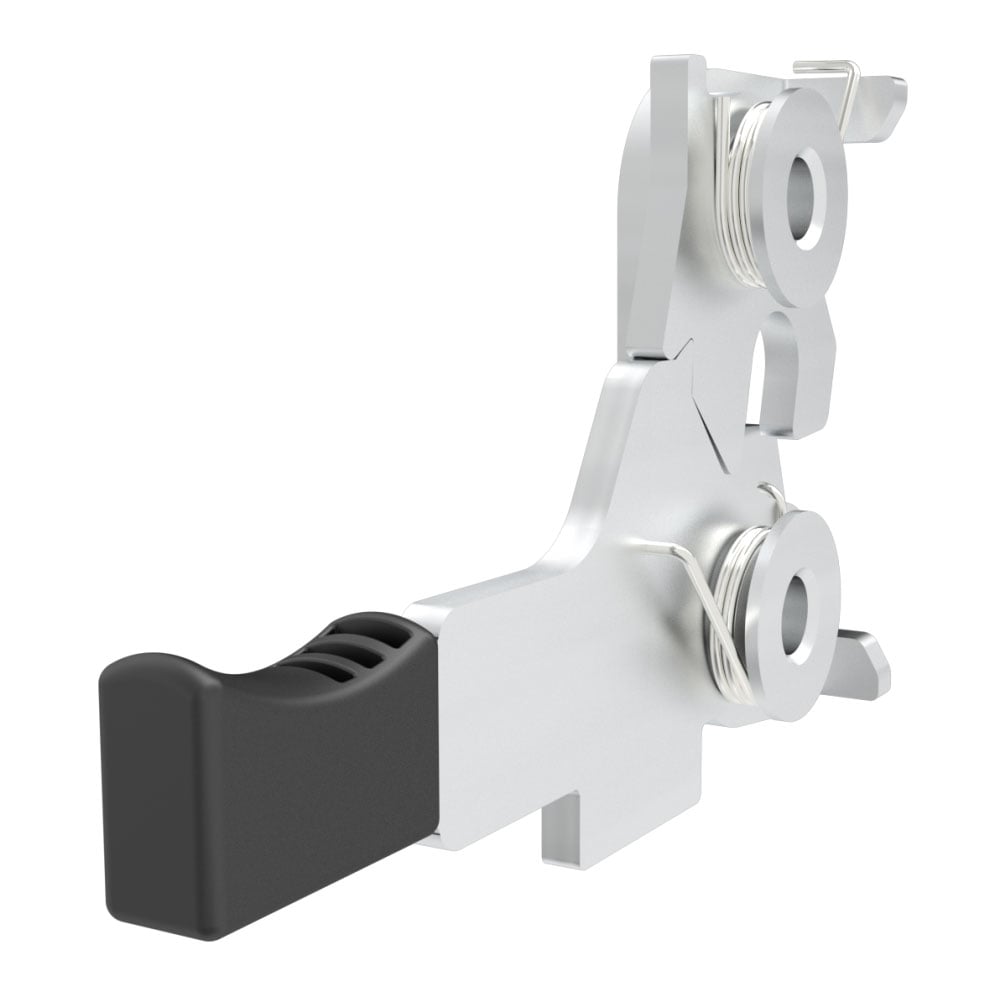
Push to close latch, also known as bang bang latch or bolt latch. This is the most common type of latch. Its obvious feature is that it has a spring structure. When the door approaches the closed position, it will automatically engage the striking plate, and no manual operation is required.
These latches are widely used in factory workshops and warehouse areas, especially in spaces with high traffic. When workers carry items with both hands, a simple push with their body is enough to secure the door, significantly improving efficiency. Additionally, they can usually be opened from the inside by turning a handle or pressing a button, meeting emergency evacuation requirements.
When it comes to the manufacturing material, it is usually made of stainless steel or galvanized steel. Stainless steel is moisture-resistant, corrosion-resistant and can withstand harsh environments. High-end models usually also have shockproof designs to prevent accidental unlocking due to equipment vibration.
Rotary Latch – Stable and Reliable
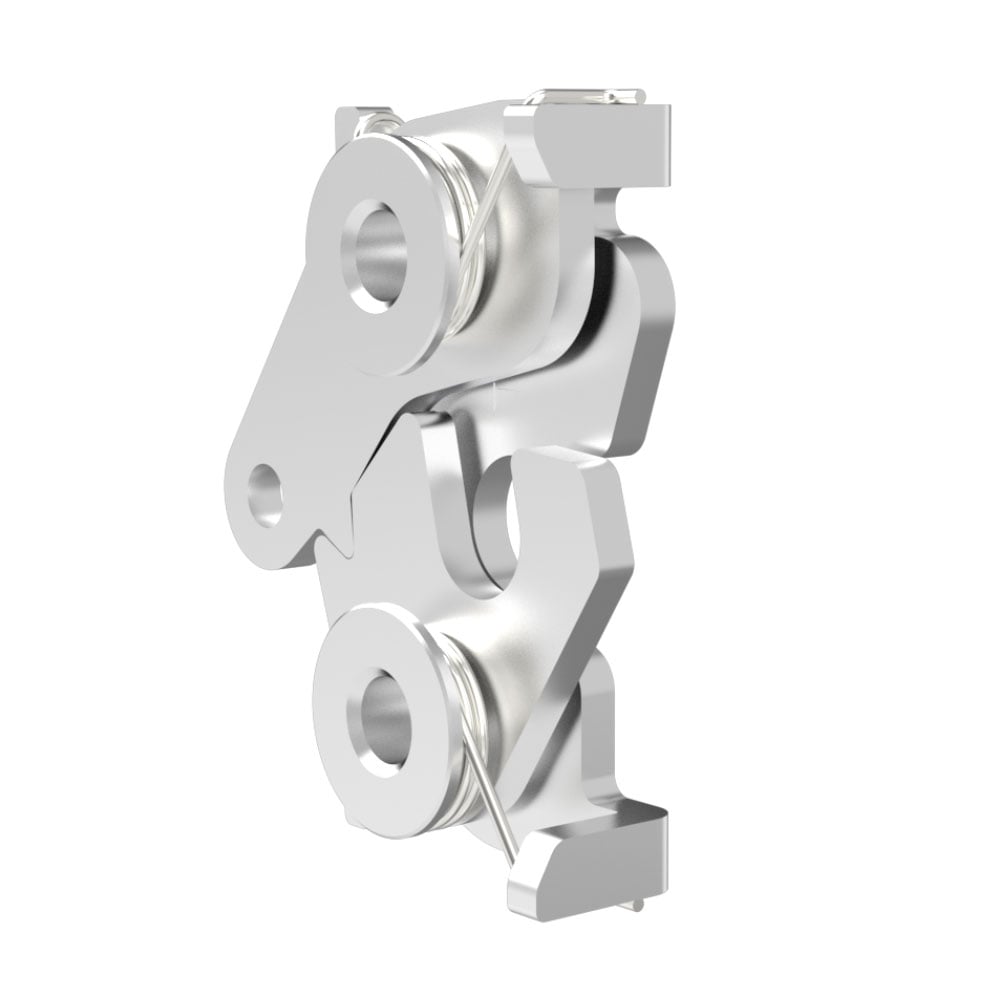
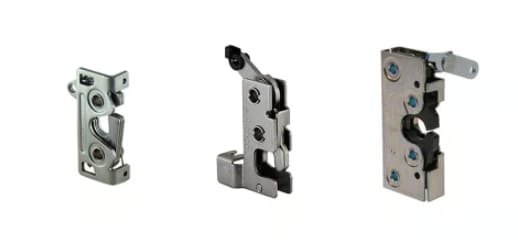
Rotary latch, this type of latch locks or unlocks by rotating the handle or key to extend or contract the bolt. Rotary latches are typically used in industrial equipment protective doors, electrical control cabinets and other similar applications.
Unlike household rotary latches, the valve bodies and bolts of industrial rotary latches are stronger and thicker. In addition, the rotary latch features a tamper-proof design, which is capable of resisting forced entry. They also offer better sealing to prevent dust and liquids. Some models integrate interlocking mechanisms to ensure operational safety.
For instance, in highly safe environments such as chemical plants or power stations, rotary latches are usually paired with mechanical or electronic interlocking systems to ensure that the protective door can only be opened under safe conditions.
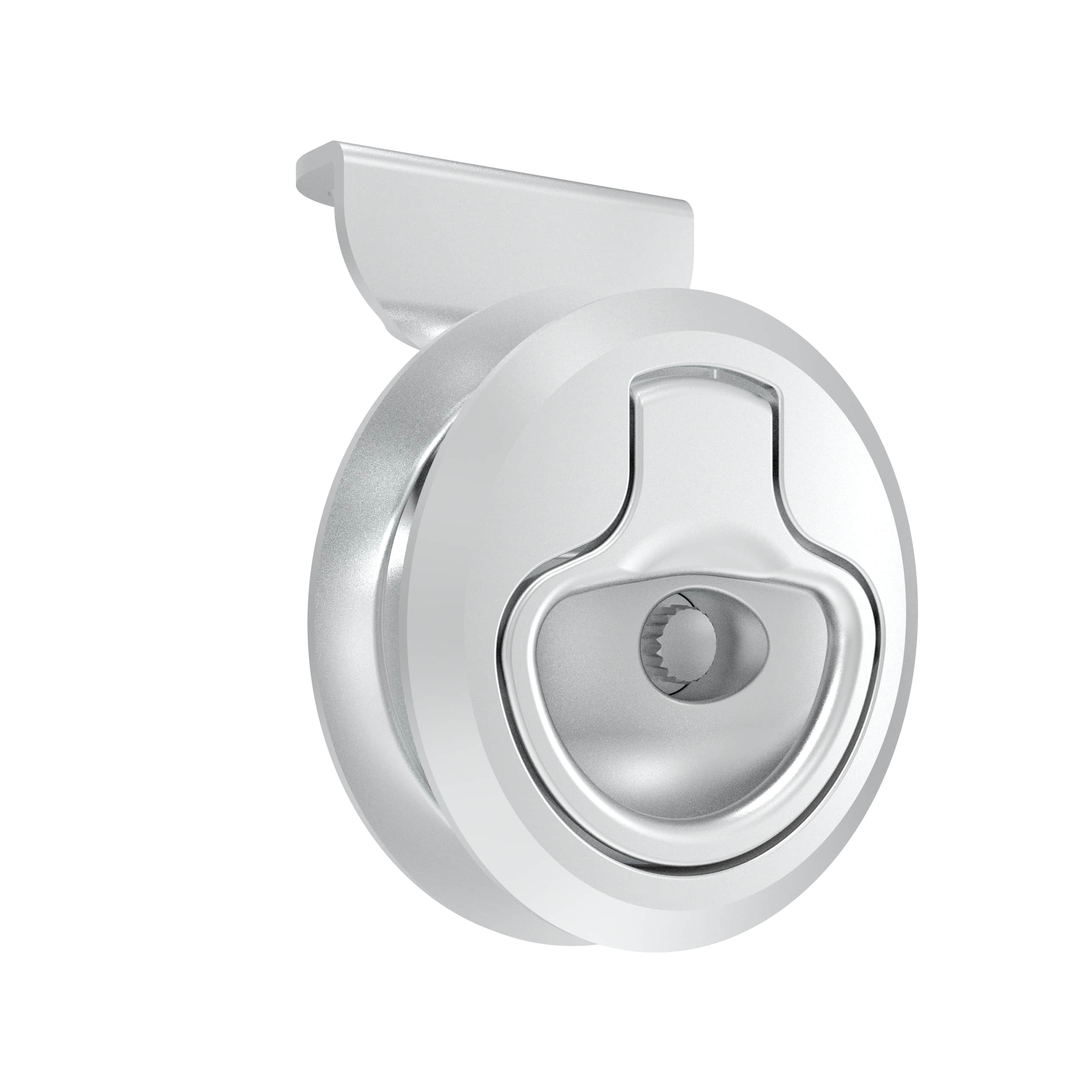
Draw Latch – Quick Operation
Latch (or pull latch), directly pull or push the bolt operation, providing intuitive and simple functions. It is particularly popular in industrial environments that require quick access.
Typical applications are specifically reflected in the cargo hold doors of logistics vehicles, industrial oven and sterilization equipment doors, temporary fences and gates, tool and material cabinets, etc.
It is worth noting that industrial latches usually have a "foolproof design", such as color-coded bolts (red for locking and green for unlocking), which can prevent misoperation. High-end models may also include position sensors to transmit the status of the door to the central control system.
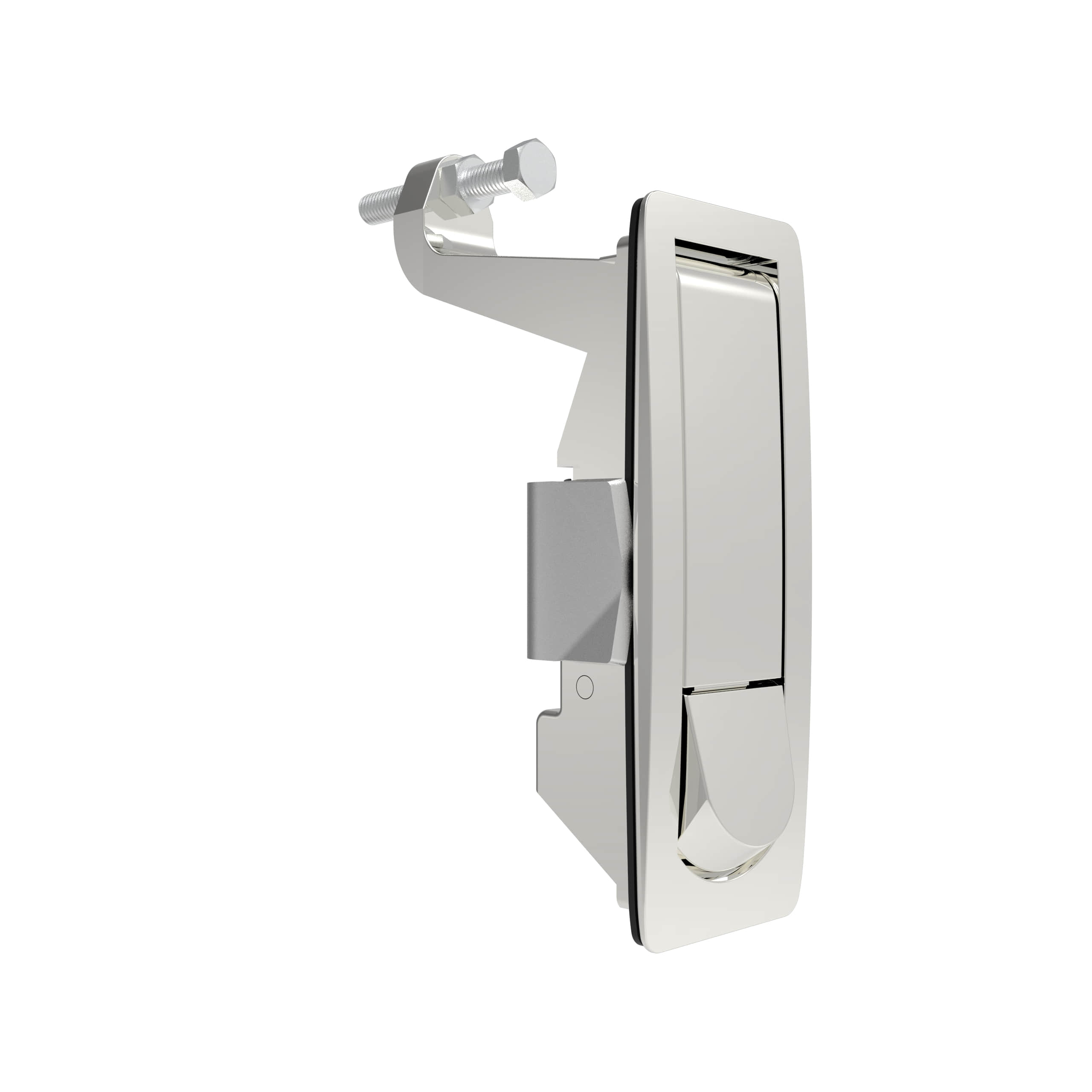
Compression Latch – Tight Sealing
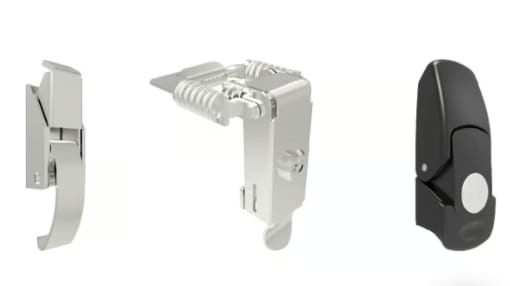
The compression latch uses mechanical force to firmly press the door against the door frame, providing excellent sealing performance. It is very common in industrial equipment that requires dust-proof, water-proof or controlled internal environments.
The characteristics of the compressed latch can be summarized as multi-point locking and uniform pressure distribution.
The compression force is adjustable to meet different sealing requirements. It can withstand outdoor or harsh environments. It is usually paired with a sealing gasket.
In industries with high cleanliness standards, such as food processing, pharmaceuticals, and electronics manufacturing, compression locks are crucial for maintaining a compliant production environment. One more point, the compressed latch can also effectively prevent rain and salt spray from entering the ocean or field equipment.
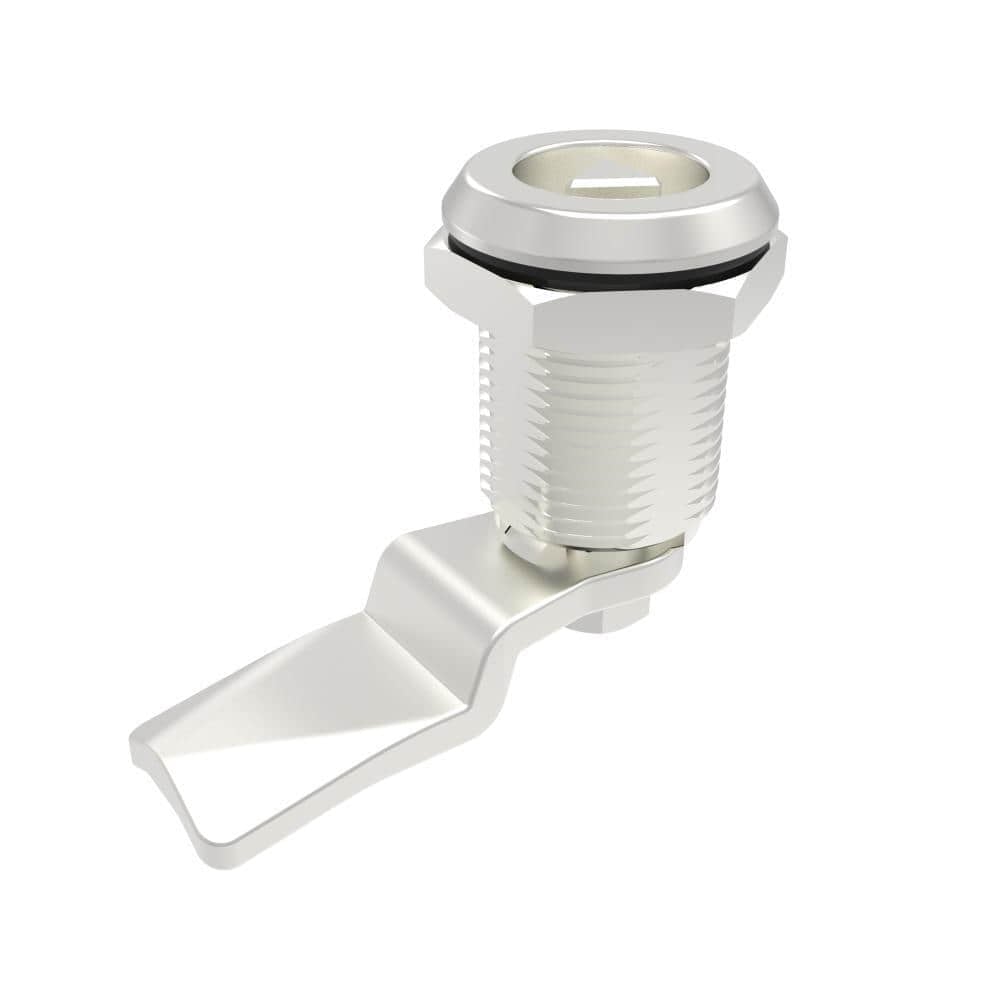
Quarter-Turn Latch – Compact Spaces
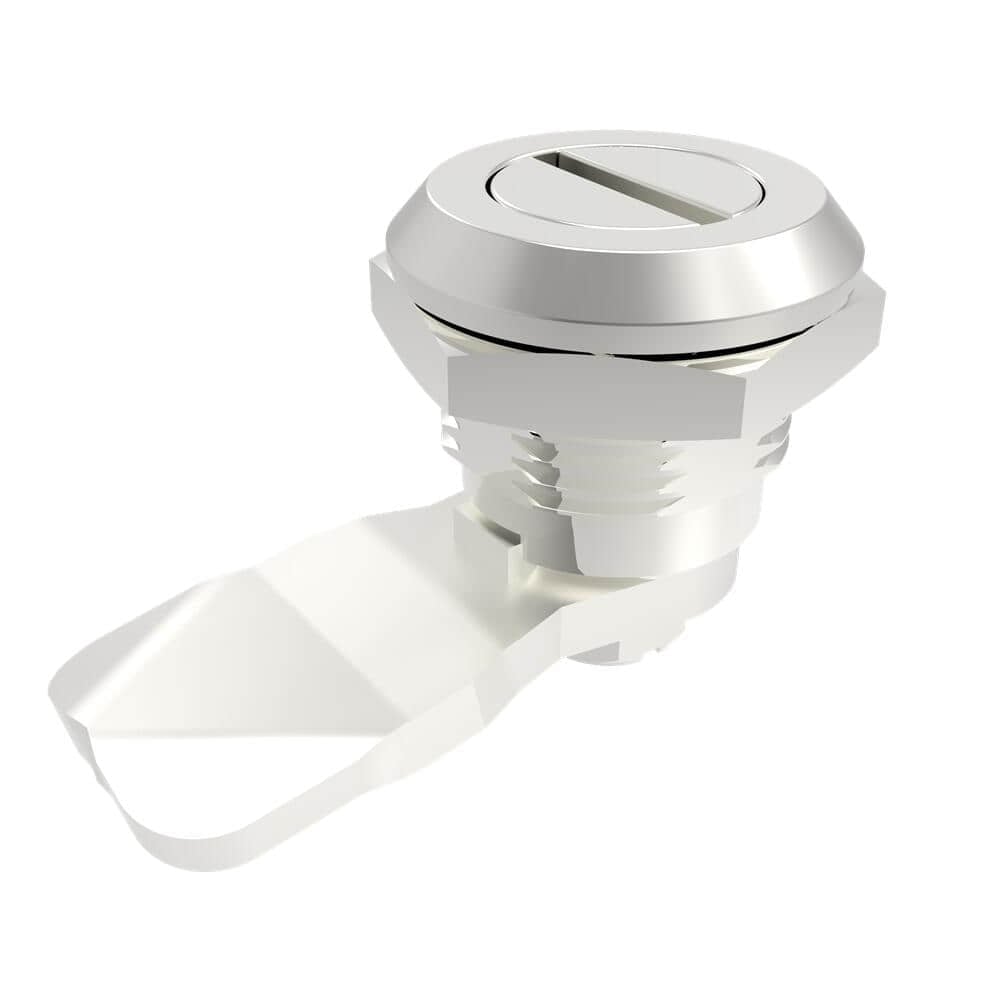
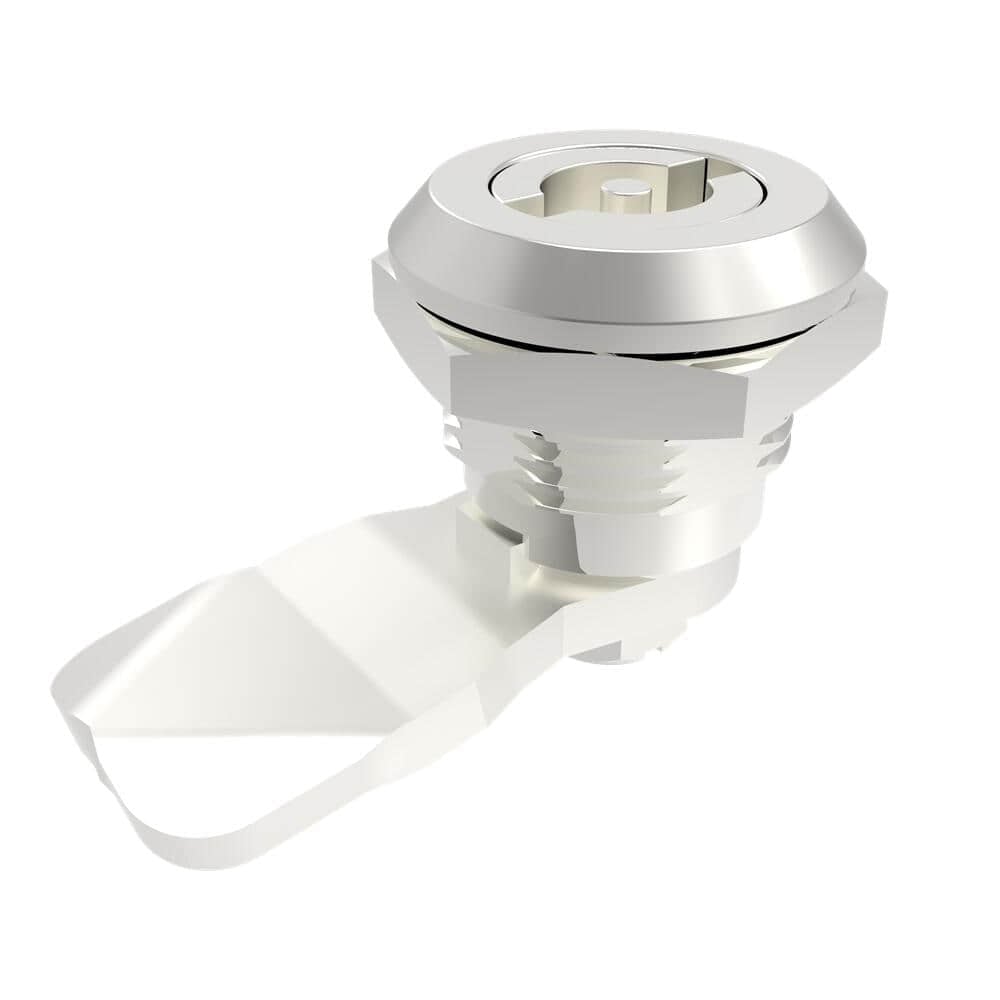
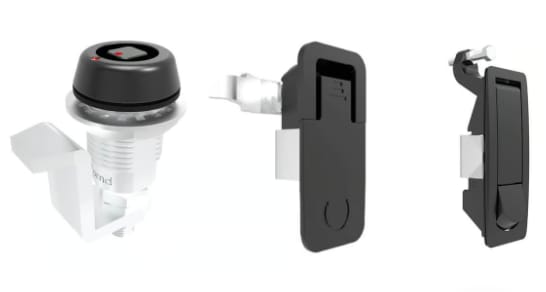
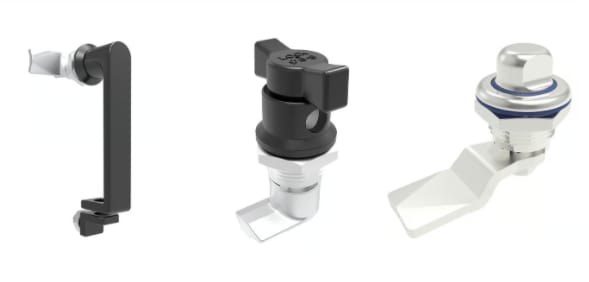
Quarter-turn locking, obviously, it can rotate 90 degrees, so it is very suitable for industrial applications with limited space. Essentially, they convert rotational motion into linear bolt motion, providing reliable locking in a narrow space.
Typical use cases can be found in instrument housing access panels, industrial robot guards, compact electrical control cabinets, and vehicle-mounted equipment boxes, etc.
The industrial quarter-turn lock performs exceptionally well in terms of the minimum space usage. It can ensure seamless integration with the surrounding equipment. Its low operating torque can effectively reduce user fatigue, even after long-term use. Many models also feature visual locking indicators and anti-misoperation mechanisms to prevent loosening due to vibration.
How to Quickly Select an Industrial Latch?
Simply speaking, when choosing an industrial latch, please consider the following factors:
• Environmental requirements: Special materials and coatings are necessary in outdoor, humid or corrosive environments.
• Security requirements: Is it standard protection or a high security level?
• Usage frequency: More durable models are required for high-frequency applications.
• Special Features: Is interlocking, quarter-turn status feedback or other advanced features required?
About Fornd
Though small, industrial latches play a crucial role in safety. Selecting the right type and a reliable product ensures long-term, stable protection for industrial facilities.
Among industrial latch brands, Fornd has earned global trust for its superior quality and innovative designs. Whether for hygienic latches in food plants or salt-resistant latches for offshore platforms, Fornd delivers professional solutions. Its quarter-turn latch series, with its compact structure and dependable performance, is the top choice for precision industrial equipment.